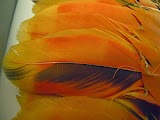
Parrots of War: Kabul Edition. Ka Faroshi Bird Market
Entering Kabul’s Ka Faroshi bird market is like stepping back in time a hundred years, to a corner of the city untouched by war or modernization. Also known as the Alley of Straw Sellers, it’s a narrow lane tucked away behind the Pul-e Khishti Mosque, lined with stalls and booths selling birds by the dozen, plus the occasional rabbit.
Showing posts with label wild caught parrots. Show all posts
Saturday, March 5, 2016
Saturday, January 18, 2014
The Parrot Diaries. Bird Bath, Or: Water Water Everywhere
Like most avians, our parrots love to bathe. The macaws mostly prefer showers. Some of our parrots prefer baths. Our Goffin's Cockatoo prefers a water bottle mister. A couple of our parrots prefer bathing in their water dishes.
Our Ruby macaw parrot Mr. Cracker loves to bathe in his water dish. He's a fairly big parrot. By comparison, his water dish is not all that big. The results can be entertaining. As well as a big mess.
We always know when Mr. Cracker wants to take a bath because he starts telling us, very loudly, Bye Bye! He keeps this up until we finally leave his sight. Until very recently, he would only take a bath when no people were around to observe him. We can only surmise that he must have gotten into trouble with a previous owner when he tried to bathe. Thus his desire for privacy. Over time his comfort level has increased to the point that only very recently has he started to bathe with people still around to watch him. But he still tries to shoo us off with his chants of Bye, Bye!
Our Ruby macaw parrot Mr. Cracker loves to bathe in his water dish. He's a fairly big parrot. By comparison, his water dish is not all that big. The results can be entertaining. As well as a big mess.
We always know when Mr. Cracker wants to take a bath because he starts telling us, very loudly, Bye Bye! He keeps this up until we finally leave his sight. Until very recently, he would only take a bath when no people were around to observe him. We can only surmise that he must have gotten into trouble with a previous owner when he tried to bathe. Thus his desire for privacy. Over time his comfort level has increased to the point that only very recently has he started to bathe with people still around to watch him. But he still tries to shoo us off with his chants of Bye, Bye!
Saturday, April 6, 2013
If Life Gives You Lemons, Just Make Your Own Beach
However erudite, well mannered, and communicative our parrot companions are with us, especially our African grey parrot companions, they are still wild animals at heart. It would be better for them and us if they were all living their wild lives out in the wilds of Africa, and wherever else they originated. Unfortunately for them and us they are not and never will. So we just have to do the best we can for them. Make their lives as companion parrots as fulfilling, safe, and carefree as it is possible to make. Then we just hope that in our next lives we don't come back as a parrot stuck in a cage!
Saturday, August 25, 2012
Parrots in History: Amazon Indian Practices to Change Parrot Feather Color
As early as
the Seventeenth Century, European explorers in South America discovered that
Amazonian Indians developed techniques to change the color of
parrot feathers from natural colors, mostly green and blue, to colors considered more desirable by the Indians, primarily yellow, or orange. These parrot feathers were highly desired for use in headdresses, leggings, and other ornamentation. To create this color change, Amazonian
Indians plucked feathers from live parrots to induce change in feather
coloring. This practice was studied by an early Twentieth Century
Swiss scholar and explorer Alfred Métraux. His research was published in 1928
in the Journal of the Society of the Americas, Volume 20, under the title:
Une
découverte biologique des Indiens de l'Amérique du Sud : la décoloration
artificielle des plumes sur les oiseaux vivants
A Biological
Discovery of South American Indians: Artificially Recoloring Feathers on Live
Birds
(Note: The
translation from the French text is mine, and any faults with the translation
are mine alone.)
Alfred Métraux
Observed by European explorers, this traditional method was used throughout the Amazon to alter feather color on parrots by repeatedly plucking green or blue feathers, and applying various substances to the parrot skin. New feathers reportedly grew back yellow-orange, sometimes with red or pinkish areas near the vein. In some of the feathers the reddish coloration occurred in a stripe-like pattern. In other cases, the feathers showed irregular areas where the feather is blue or green (on one side of the vein), or in some cases the yellow feather has a green shaft with surrounding green areas. We wrote about this Amazonian Indian tradition in an earlier blog post.
According to Alfred Métraux, the presence of flocks of parrots in the vicinity of the Indian tribes allowed them to be plucked and provided the raw material for crowns, caps, collars, and leggings. The Tupi Indians of Brazil were not content to pluck the feathers of captured birds. They attempted to change the color of the living birds’ natural plumage. The Tupi Indians coated the feathers with frog’s blood to make green feathers grow yellow.
Changing feather colors increased their value and price, either for
sale or use in their festivals. Tupi Indians caught live toads which they stung repeatedly with thorns. The toads were cooked in a pot with chili pepper and red dust called
chica, creating a varnish. The Indians
tore feathers off of parrots and applied the varnish by inserting the tip of a
stick in the feather holes in the skin. The parrot did not cease to suffer for
several days. After some time the parrot resumed growing feathers, so beautiful
they were a subject of admiration to see the beauty and elegance with which
they grew. We noticed red spots on the feathers on a yellow background.
South of the Amazon this practice of plucking was rare, found only among the Arawak
Indians.
Alfred Métraux quoted a Seventeenth Century report:
The Indians tear the tail feathers and wing feathers of blue parrots,
apply in the wounds of the skin toad juice and cover with wax. This way, they
manage to regrow feathers with a bright red color they never lose.
The Bororo Indians rubbed the birds they plucked with the sap of a
tree.
For the Indians of Guyane, one of the most flattering colors in the
eyes of men and women is yellow. There are not enough parrots in this country
whose feathers can meet their needs. They discovered the art of turning green
feathers into yellow:
They take a live parrot and tear feathers they want to become yellow.
After plucking they apply a plant root dye which has the color saffron. They
rub the dye hard with their fingers, almost like they wanted to bring out the
blood. As feathers regrow, any new green feathers are plucked again and the
process restarted. With this technique they manage to make them all yellow.
The Puinav Indians to color parrots in yellow made them eat the fat of
fish common to the region. This fat is yellow. The feathers of the parrot that
feeds on the fat gets smudged yellow and eventually takes on this color.
Alfred Métraux quoted Alfred Russell Wallace’s 1892 account of life
among South American Indians:
They pluck the birds they want to dye, and the fresh wounds are
inoculated with a milky secretion of small frog or toad. When the feathers grow
back they are bright yellow or orange, without any mixture of blue or green
which is the natural coloring of the bird. If the new plumage is torn it is
said to regrow in the same color without needing to redo the operation. The
feathers are renewed but slowly and it takes a large number to make a tiara,
which is why the possession of such finery is such a big deal.
An historical tradition or not, we would call this practice animal cruelty. Unfortunately this tradition of plucking parrot feathers among South American Indians is not confined to the dark reaches of the historical past, but continues to this day, and is the object of continuing study by researchers.
Monday, October 24, 2011
Wild Parrots Should Stay Wild!
The desire to fly is an idea handed down to us by our ancestors who... looked enviously on the birds soaring freely through space...
on the infinite highway of the air.
Wilbur Wright
on the infinite highway of the air.
Wilbur Wright
Recently Audubon Magazine summarized the illegal parrot trade still ongoing today:
The business of exotic pets is poorly regulated and enormously profitable: Interpol values the illegal animal trade at $10 billion dollars, placing it just behind guns and drug trafficking in profitability. This illicit industry is believed to have contributed to the threatened status of 66 parrot species and the extinction of brilliant blue Spix’s Macaw.
At the least the illegal parrot trade threatens the biodiversity of parrot species, and at worst may result in the extinction of many parrot species within our lifetimes!
Mr. Cracker is a wild-caught Ruby macaw believed to be about 40 years old. Does Mr. Cracker dream of flight when he's flapping his wings in the house?


For too many parrots the gruesome reality of the companion parrot trade is a transport box at the hands of wildlife poachers with small chance of survival!
Wild parrots should stay wild! The best way to preserve wild populations of parrots is to halt the commercial breeding and sales of companion parrots. The companion parrot market only encourages the poaching of wild parrots. We have a simple credo when it comes to companion parrots:
Parrots: Don't Breed! Don't Buy! Adopt!
For me, the sight of a Parrot living alone, living in a cage, deprived of flight and miserably bored, breaks my heart. And the Parrot's too perhaps.
Dr. Jane Goodall.
Sunday, October 9, 2011
Somewhere Over the Rainbow
The parrot rescue effort needs an anthem, and no song seems to us more appropriate to the parrot rescue effort than Somewhere Over the Rainbow. Too often abused and rescued parrots only find relief and solace after crossing over the Rainbow Bridge.
Somewhere Over the Rainbow is Judy Garland's signature song, written by Harold Arlen and E.Y. Harburg and first sung for the 1939 movie Wizard of Oz.
Our favorite version of Somewhere Over the Rainbow is this one by the late great silver-tongued Hawaiian singer Israel "IZ" Kamakawiwo'ole (1959-1997). We love watching this big guy (he weighed over 750 pounds) play that little ukulele! "IZ" overcame adversity in his life to become considered one of the fifty greatest voices ever by National Public Radio. His anthem provides a ray of hope and cheer for those of us who deal with ugliness and sorrow in our work with companion parrots!
Somewhere Over the Rainbow is Judy Garland's signature song, written by Harold Arlen and E.Y. Harburg and first sung for the 1939 movie Wizard of Oz.
Our favorite version of Somewhere Over the Rainbow is this one by the late great silver-tongued Hawaiian singer Israel "IZ" Kamakawiwo'ole (1959-1997). We love watching this big guy (he weighed over 750 pounds) play that little ukulele! "IZ" overcame adversity in his life to become considered one of the fifty greatest voices ever by National Public Radio. His anthem provides a ray of hope and cheer for those of us who deal with ugliness and sorrow in our work with companion parrots!
Monday, August 22, 2011
The Captive Bird Campaign
Parrots are not like dogs and cats, with 10,000 years of domestication behind them. Simply put: Parrots are wild animals! Wild animals should stay in the wild. Like raptors, parrots are not animals that are suitable to be pets. People can not simply walk into PetSmart and buy a hawk or a falcon. Ownership of raptors requires specialized training, education, and licensing. Why should parrots be treated any differently?
Regarding companion parrots, we have a simple credo:
Parrots: Don't Breed! Don't Buy! Adopt!
We understand that tens of millions of companion parrots will never be returned to the wild. But there is absolutely no reason to keep breeding and selling hand-raised companion parrots. We firmly believe that the commercial breeding and sale of companion parrots needs to be halted, at least for any parrots that are listed as Threatened or Endangered by CITES. Therefore, we heartily endorse The Captive Bird Campaign:
The Captive Bird Campaign is launched by the California-based animal rights organization In Defense of Animals (IDAUSA). The goal of the Captive Bird Campaign is simple:
Our goal is to help create a better world for parrots by stopping the exploitation and sale of parrots in chain stores such as PetCo, PetSmart, and Petland. Helping the public understand that parrots are wild creatures who do not belong in captivity will reduce the sale of parrots. This will ultimately decrease the number of unwanted and homeless parrots and prevent unnecessary suffering.
Parrots rank only behind dogs and cats in popularity as pets. Considering the potential lifespan of parrots, companion parrots will be with us for some time to come. We only ask: If you are considering acquiring a companion parrot, please:
Don't Breed! Don't Buy! Adopt!
Wednesday, May 25, 2011
Animal Trafficking in Mexico, Around the World, Endangers Parrots and Other Animals
Here is something to consider the next time someone says that parrot and wildlife smuggling is a thing of the past:
The Defenders of Wildlife in Mexico said, “It is estimated that between 65,000 to 78,000 parrots are caught illegally every year and from them, 77 percent die before they arrive in to the hands of a buyer. The mistreatment these animals suffer explains the high mortality rate.”
Sadly, we will see the extinction of many wild parrot populations within our lifetimes!
Tuesday, November 9, 2010
Mr. Cracker's Song and Dance: An Update on Our Foster Ruby Macaw
Mr. Cracker is a thirtysomething presumed male Ruby macaw who came to us two months ago when his parront was rushed to the hospital in critical condition. Cracker had lived with this person for nearly twenty-five years. When we brought him home he cried for two days. And then he pretty much shut up. It took him about six weeks to decide he wasn't going to starve to death after all, and stopped literally inhaling all the food we put in his food dish. He would even eat lettuce leaves. We've never known a parrot to eat lettuce! When Cracker came to us he had been subsisting on a diet of sunflower seeds and peanuts. We have no idea how long this condition existed, but Cracker was probably literally starving to death!

We started Cracker on a daily course of organic red palm oil spread on toast which he devours, because of the positive reports we've read about plucking macaws treated with red palm oil. Of course there's no way to know absolutely whether a change in environment, a proper diet, the red palm oil, or a combination of the above contributed, but after two months we are seeing significant feather growth on Cracker's body, wings, and legs. Although we continue to find plucked feathers on the floor, the volume seems significantly reduced from when Cracker first came to us. The next photo shows the change over the past six weeks:

Needless to say, we're keeping our fingers crossed! Our next step to to address Cracker's socialization. Mr. Cracker still won't less us touch or handle him, but we are told his previous parront was able to step him up on his arm whenever he wasn't on his cage.
Cracker was the parrot's original name, but the previous parront renamed him Alexander, because he felt the name Cracker was undignified for a parrot. Even though he does say Alexander, Cracker immediately let us know that he prefers the name Cracker. It may be stupid, but it's still his name.
After two months with our flock, Mr. Cracker is finally letting his true personality show. He has developed a friendship for our male Blue and Gold macaw Aboo, and Cracker starts singing and dancing every time Aboo comes upstairs to join the flock. Aboo lives downstairs, because he can't live near a window. We managed to record some of the song and dance routines for YouTube. We present, in High Definition, Mr. Cracker's Song and Dance:
Except for letting us know virtually right away that he preferred the name Cracker, as we mentioned, Mr. Cracker pretty much shut up for about six weeks. This seems to have coincided with the time he still thought he might starve. But over the past two weeks he has started talking, singing, and dancing up a storm! For a summary of his original vocabulary, please refer to our previous blog post introducing Alexander/Cracker. Now we can barely keep up with the words and phrases we hear from him daily. He carries on a regular conversation that is still too garbled to us to understand. But besides his previous and current names, he says Come here, Food, Eat your food, What, What you doing, Parrot, I'm a parrot, Good bird, Bad bird, Hello, and Hello there. Recently, when we get ready to head out the door in the morning to go to work, he has started saying Bye Bye! He knows what Give a kiss means, and he freely blows air kisses.
When he came to us, his chest, back, legs, and shoulders were plucked bare. Apparently the plucking coincided with the previous owner falling seriously ill about six months previous to his joining our flock. This photo of Cracker devouring some corn on the cob shows just how bare his chest became:

We started Cracker on a daily course of organic red palm oil spread on toast which he devours, because of the positive reports we've read about plucking macaws treated with red palm oil. Of course there's no way to know absolutely whether a change in environment, a proper diet, the red palm oil, or a combination of the above contributed, but after two months we are seeing significant feather growth on Cracker's body, wings, and legs. Although we continue to find plucked feathers on the floor, the volume seems significantly reduced from when Cracker first came to us. The next photo shows the change over the past six weeks:

Needless to say, we're keeping our fingers crossed! Our next step to to address Cracker's socialization. Mr. Cracker still won't less us touch or handle him, but we are told his previous parront was able to step him up on his arm whenever he wasn't on his cage.
Mr. Cracker is still in need of a permanent Seattle area home, with someone who has macaw experience, and preferably already has macaws in their home. We think Mr. Cracker will do best living with other macaws. For more information about adopting Mr. Cracker, and other parrots in need of good new homes, please visit Northwest Parrots Fund.
Wednesday, March 18, 2009
Subscribe to:
Comments (Atom)