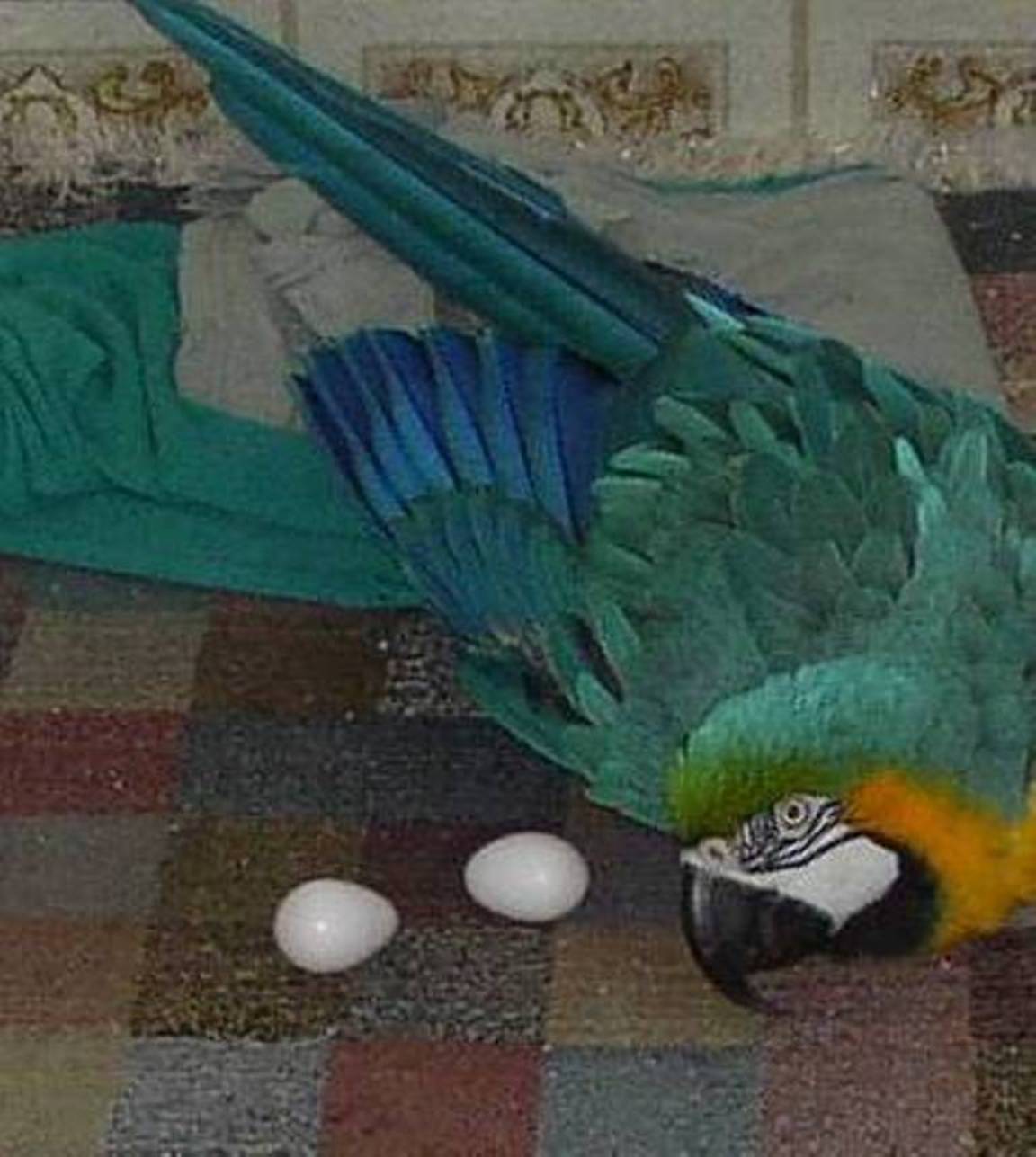
Showing posts with label Ruby macaw. Show all posts

Saturday, October 10, 2015

Parrot 101: How Parrots Do What They Do

Parrot 101: How Parrots Do What They Do


Featuring Our Ruby Macaw Parrot Mr. Cracker

Featuring Our Hyacinth Macaw Parrot Princess Tara

Sunday, March 16, 2014

The Parrot Diaries: First Rule of Finding Yourself in a Hole: Stop Digging


Most people are familiar with the old Will Rogers axiom: When you find yourself in a hole, stop digging. The parrot equivalent should be: When you find yourself on a perch, stop chewing. Our Ruby macaw Mr. Cracker is a portable woodchipper. He loves to chew. At least once, that we know of, he's chewed through his perch. While he was sitting on it. You'd think he'd learn. But the experience hasn't stopped him from chewing through his perches.


To make our life easier, we decided to start using two by twos for Mr. Cracker's perches. They fit his big feet perfectly. We started with pine. Big mistake. That lasted about two days. So we switched to fir. Much harder wood. Much harder for Mr. Cracker to chew through his perch. Not that it stopped Mr. Cracker from trying to chew through his perch. He just had to work at it harder. The perches last longer. We're talking weeks instead of days. We try to catch the perch before he manages to chew through it. And switch it out with a new one. Not horribly expensive. And the old perch gets sawed up for chew toys.


And we keep hoping that some day Mr. Cracker will stop trying to chew through his perch and focus on chewing his chew toys instead. We can always dream.


Saturday, January 18, 2014

The Parrot Diaries. Bird Bath, Or: Water Water Everywhere

Like most avians, our parrots love to bathe. The macaws mostly prefer showers. Some of our parrots prefer baths. Our Goffin's Cockatoo prefers a water bottle mister. A couple of our parrots prefer bathing in their water dishes.

Our Ruby macaw parrot Mr. Cracker loves to bathe in his water dish. He's a fairly big parrot. By comparison, his water dish is not all that big. The results can be entertaining. As well as a big mess.


We always know when Mr. Cracker wants to take a bath because he starts telling us, very loudly, Bye Bye! He keeps this up until we finally leave his sight. Until very recently, he would only take a bath when no people were around to observe him. We can only surmise that he must have gotten into trouble with a previous owner when he tried to bathe. Thus his desire for privacy. Over time his comfort level has increased to the point that only very recently has he started to bathe with people still around to watch him. But he still tries to shoo us off with his chants of Bye, Bye!

Monday, May 28, 2012

Eyes Are the Windows to Your Soul

William Shakespeare is supposed to have famously said: Eyes Are the Windows to Your Soul. Peer into the eyes of a macaw parrot, and what do you see?


“The soul, fortunately, has an interpreter - often an unconscious but still a faithful interpreter - in the eye.” 
― Charlotte BrontëJane Eyre

“An animal's eyes have the power to speak a great language.” 
― Martin Buber

“The face is a picture of the mind with the eyes as its interpreter.” 
― Marcus Tullius Cicero

“Almost nothing need be said when you have eyes.” 
― Tarjei VesaasThe Boat in the Evening

Monday, October 24, 2011

Wild Parrots Should Stay Wild!

The desire to fly is an idea handed down to us by our ancestors who... looked enviously on the birds soaring freely through space...
on the infinite highway of the air.
Wilbur Wright


Recently Audubon Magazine summarized the illegal parrot trade still ongoing today:

The business of exotic pets is poorly regulated and enormously profitable: Interpol values the illegal animal trade at $10 billion dollars, placing it just behind guns and drug trafficking in profitability. This illicit industry is believed to have contributed to the threatened status of 66 parrot species and the extinction of brilliant blue Spix’s Macaw.


At the least the illegal parrot trade threatens the biodiversity of parrot species, and at worst may result in the extinction of many parrot species within our lifetimes!

Mr. Cracker is a wild-caught Ruby macaw believed to be about 40 years old. Does Mr. Cracker dream of flight when he's flapping his wings in the house?

For too many parrots the gruesome reality of the companion parrot trade is a transport box at the hands of wildlife poachers with small chance of survival!


Wild parrots should stay wild! The best way to preserve wild populations of parrots is to halt the commercial breeding and sales of companion parrots. The companion parrot market only encourages the poaching of wild parrots. We have a simple credo when it comes to companion parrots:


Parrots: Don't Breed! Don't Buy! Adopt!
Wild Parrots Should Stay Wild print
For me, the sight of a Parrot living alone, living in a cage, deprived of flight and miserably bored, breaks my heart. And the Parrot's too perhaps.
Dr. Jane Goodall.

Friday, October 21, 2011

Feeding Parrots: Making Toast Française

Are your parrots tired of eating Chop and Mash day in and day out? Make them some real food! Toast Française for example is pathetically easy to make. And your kitchen smells so good after you fry up a batch you won't want to leave the room.


Making Toast Française
(Irresistible to Parrots)


Surprisingly few ingredients are required to make Toast Française. Basically: bread, milk, egg, cinnamon, and whatever you want to use for coating the toast. Crushed pellets, chopped nuts, and cereal come to mind. Our parrots love organic Peanut Butter Panda Puffs! Our parrots are also partial to vanilla soy milk.


1 slice of bread, toasted
1 Teaspoon milk
1 Egg
1/8 Cup Crushed topping
Dash cinnamon


We cook up two slices of toast per meal for our eight parrots, so we double the ingredients, except for the egg.

Our female Timneh African grey parrot Tillie supervising production of one of her favorite dishes. Got to keep an eye on that yolk.

Seriously beat the egg and milk together for about 30 seconds. Really fluff it up! Stir in the crushed pellets, nuts, cereal, or whatever you wish to use, to coat the toast.


Dip the toasted bread in the egg and milk mix. Your parrot will definitely want to supervise this step!


Fry the toast up in a Stainless Steel pan with cooking spray or a touch of vegetable oil. We like olive oil. Let cool, obviously. It's so good you might just want to make some extra for yourself.


Cut up to desired size.


Serve.

Beak Appetit!

Toast Française  is a favorite with parrots large and small. Our foster Ruby macaw Mr. Cracker can't dive into his food dish fast enough to savor his Toast Française!

Sunday, July 24, 2011

Do Parrots Dream?

We were jolted awake this morning at about 5:30 am with the sound of a humongous thump, followed by the furious flapping of wings. Just getting light enough to see, we scrambled out of bed to check all the parrot cages to see which parrot fell off its perch. We found our female Blue and Gold macaw Miss Bubba Boy clinging to the side of her cage, quite agitated and somewhat disoriented. We suspect that a bad dream caused her to fall off of her perch.


Our female Blue and Gold macaw Miss Bubba Boy enjoying apple cider at the
Ballard Farmers Market.

Which got us thinking while we were trying to fall back to sleep (just who wants to get up at 5:30 am on a Sunday, really!). Do parrots dream?


It is pretty well established that parrots are capable of cognitive reasoning. Parrots can carry out actions purposefully, and they are capable of quite sophisticated problem solving. So it would not be any surprise to us that parrots dream and even suffer nightmares.


Although the episode this morning was a first for our female Blue and Gold macaw, this was not the only time we've been jolted out of bed in the dead of night by one of the parrots falling off its perch. Of our eight parrots, three have experienced falling off their perches during the night. Other than Miss Bubba Boy, our Greenwing macaw and Diva parrot Roxanne,


Our Greenwing macaw and Diva parrot Roxanne, named for the song.

as well as our female Congo African grey parrot Arua, have fallen off their perches during the night on multiple occasions.


Our female Congo African grey parrot Arua, just hanging out!

We wonder if birds with greater brain power such as African greys are more prone to dreaming than other birds? We have thought that possibly the parrots were startled during the night by some sound coming from outside the house which may have caused them to fall of their perches. But in at least two cases we can recall, we were wide awake in the night when the falling episode occurred, so we can rule out external causes.

Other times we'll be lying awake in the dark of night and hear one of the parrots start to vocalize. Our male Blue and Gold macaw Aboo will softly start speaking to himself, in a voice barely audible.


Our male Blue and Gold macaw Aboo playing with our Hyacinth macaw Princess Tara.

Is he talking in his sleep. We'll hear our foster Ruby macaw Mr. Cracker laughing out loud in the middle of the night. Is he reliving a prior event in his dreams. Old enough to be a possibly wild-caught macaw, we wonder if he's dreaming of his life before? Mr. Cracker will also on occasion start up a conversation with himself.


Our foster Ruby macaw Mr. Cracker is old enough to be a wild-caught macaw.

And then there was the night we were awakened by our female Blue and Gold macaw Miss Bubba Boy laughing maniacally in the dead of night as if she were an ax murderer ready to commit a crime. Needless to say, we didn't get out of bed!

So, what do you think? Do parrots dream? We think so. And unfortunately experience nightmares as well. If you have any experiences with your parrots dreaming, please share them with us.

Monday, June 13, 2011

How Does Your Parrot Communicate With You?

How do you communicate with your parrot? More importantly, how does your parrot communicate with you? How does your parrot for example, tell you when he or she is hungry or thirsty? With our parrots it's simple. They tell us. In plain English! At least some of them do.


When our female Congo African grey parrot Arua wants food she tells us: Apple. This is actually a change from her original word for food: Hot. So when it comes dinner time she starts asking for Apple. And when we give her her food dish, she confirms that it is in fact Apple. Of course Apple, or even Hot, is certainly better than the extreme pressure that she used to put on us when we were fixing birdie meals, when she would  insistently repeat: You Done Yet?


Our male Blue and Gold macaw Aboo draws a distinction between people food and parrot food. When he wants people food Aboo says: Hot. When Aboo wants parrot food he says: Crack. Presumably Crack is short for cracker, and not the other thing. But Aboo is a rescue bird, so no telling! When Aboo is thirsty, he occasionally says: Water.


Our female Blue and Gold macaw Bubba Boy (no, we didn't name her) also tends to say Hot when she wants to be fed. Makes us curious if they learned this word independently of each other, or learned it from each other. We're pretty sure Aboo started saying Hot when asking for food before the others picked it up.


Sometimes but not always, our foster Ruby macaw Mr. Cracker simply says: Food when he wants food. No mistaking his meaning there. Mostly when he's hungry he dances for his food. If he's really hungry he starts whacking his treat box.


Since we originally posted this story, Mr. Cracker has come up with a new phrase we've never heard before, and almost a complete sentence by macaw standards. We like to sleep in on weekends. One Saturday morning recently we awoke to Mr. Cracker calling out several times: Cracker. Food. Come here! Nothing like waking up to a demanding macaw.


A lady of few words, our Hyacinth macaw Princess Tara will on a rare occasion say Water when asking to drink water from the kitchen faucet. We all know that the best water in the house comes from the kitchen faucet! When she's hungry and wants to be fed she just starts honking, and anyone who's been around a honking Hyacinth macaw knows how ear-splitting that can be!


So that's five out of eight parrots in our flock that can actually ask for food or water by simply asking for food or water! So how about you? How do your parrots communicate to you that they are hungry or thirsty? Or any of their other needs and desires. Both of our Blue and Gold macaws for example, say Let Out, or Let Me Out when they want out of their cages.


Of course we're partial to our littlest parrot, our female Timneh African grey Tillie. When she wants our attention she doesn't scream or honk. She just pipes up in the sweetest little voice and says: Hi Sweetie! It's Me!

Saturday, March 26, 2011

Update on Our Foster Ruby Macaw Mr. Cracker

Our foster Ruby macaw (Greenwing/Scarlet mix) Mr. Cracker is still looking for a good Seattle area home. A presumed male, Mr. Cracker's age is unknown but he is thought to be in his thirties or forties. He has had six homes in his lifetime, his last for twenty-five years. Unfortunately his latest owner was rushed to the hospital for a medical emergency and can no longer care for the parrot. Mr. Cracker does not wear a band, so he may very well be a wild caught parrot. Mr. Cracker clearly favors men over women.


Mr. Cracker enjoying his corn bread:


For more information about Mr. Cracker, and other parrots needing good new homes, please visit Northwest Parrots Fund.

Sunday, December 5, 2010

Exercising Your Parrot

Our Hyacinth macaw Princess Tara flying in place upside down!


Too many parrots become perch potatos. Exercise is as important to parrots as it is to people. Probably even more for parrots. Wild parrots fly. Every day. Many (if not most) pet parrots simply sit in or on their cages every day. All day. The best aerobic exercise a parrot can get is flying. Even flying in place, as our foster Ruby macaw Cracker demonstrates:


Seven of our eight parrots are flighted, Two of our parrots, our Congo African grey Arua, and our Goffin's cockatoo Kid Kadra, fly regularly in our house. Two of our other parrots, our Hyacinth macaw Princess Tara and our foster Ruby macaw, Mr. Cracker, use their wings to fly in place. Princess Tara occasionally also flies in the house. Watching a Hyacinth macaw with a four foot wingspan pivot midair on her wing tip is a sight to behold!


Letting parrots fly, especially large parrots like cockatoos or macaws, presents risks. We feel that letting pet parrots fly outside, except in an enclosed flight aviary, presents risks to the parrot that can not be managed.safely. Therefore, we can not endorse flying pet parrots outside. There are still risks to flying pet parrots indoors, but these risks can be managed. If you wish to learn more about flying parrots indoors, and are wondering if this is something you want to encourage your parrot to do, there is a website you can visit with information about the risks and benefits of flying parrots indoors; Living With Flighted Parrots.


Meanwhile, even if your parrot isn't inclined to fly indoors, encourage your parrot to fly in place.


You'll have a healthier and happier parrot!

Tuesday, November 9, 2010

Mr. Cracker's Song and Dance: An Update on Our Foster Ruby Macaw

Mr. Cracker is a thirtysomething presumed male Ruby macaw who came to us two months ago when his parront was rushed to the hospital in critical condition. Cracker had lived with this person for nearly twenty-five years. When we brought him home he cried for two days. And then he pretty much shut up. It took him about six weeks to decide he wasn't going to starve to death after all, and stopped literally inhaling all the food we put in his food dish. He would even eat lettuce leaves. We've never known a parrot to eat lettuce! When Cracker came to us he had been subsisting on a diet of sunflower seeds and peanuts. We have no idea how long this condition existed, but Cracker was probably literally starving to death!

Cracker was the parrot's original name, but the previous parront renamed him Alexander, because he felt the name Cracker was undignified for a parrot. Even though he does say Alexander, Cracker immediately let us know that he prefers the name Cracker. It may be stupid, but it's still his name.

After two months with our flock, Mr. Cracker is finally letting his true personality show. He has developed a friendship for our male Blue and Gold macaw Aboo, and Cracker starts singing and dancing every time Aboo comes upstairs to join the flock. Aboo lives downstairs, because he can't live near a window. We managed to record some of the song and dance routines for YouTube. We present, in High Definition, Mr. Cracker's Song and Dance:

Except for letting us know virtually right away that he preferred the name Cracker, as we mentioned, Mr. Cracker pretty much shut up for about six weeks. This seems to have coincided with the time he still thought he might starve. But over the past two weeks he has started talking, singing, and dancing up a storm! For a summary of his original vocabulary, please refer to our previous blog post introducing Alexander/Cracker. Now we can barely keep up with the words and phrases we hear from him daily. He carries on a regular conversation that is still too garbled to us to understand. But besides his previous and current names, he says Come here, Food, Eat your food, What, What you doing, Parrot, I'm a parrot, Good bird, Bad bird, Hello, and Hello there. Recently, when we get ready to head out the door in the morning to go to work, he has started saying Bye Bye! He knows what Give a kiss means, and he freely blows air kisses.

When he came to us, his chest, back, legs, and shoulders were plucked bare. Apparently the plucking coincided with the previous owner falling seriously ill about six months previous to his joining our flock. This photo of Cracker devouring some corn on the cob shows just how bare his chest became:


We started Cracker on a daily course of organic red palm oil spread on toast which he devours, because of the positive reports we've read about plucking macaws treated with red palm oil. Of course there's no way to know absolutely whether a change in environment, a proper diet, the red palm oil, or a combination of the above contributed, but after two months we are seeing significant feather growth on Cracker's body, wings, and legs. Although we continue to find plucked feathers on the floor, the volume seems significantly reduced from when Cracker first came to us. The next photo shows the change over the past six weeks:


Needless to say, we're keeping our fingers crossed! Our next step to to address Cracker's socialization. Mr. Cracker still won't less us touch or handle him, but we are told his previous parront was able to step him up on his arm whenever he wasn't on his cage.

Mr. Cracker is still in need of a permanent Seattle area home, with someone who has macaw experience, and preferably already has macaws in their home. We think Mr. Cracker will do best living with other macaws. For more information about adopting Mr. Cracker, and other parrots in need of good new homes, please visit Northwest Parrots Fund.

Monday, September 27, 2010

Mr. Cracker Needs a Good New Seattle Area Home

Little is known about Mr. Cracker except that he may very well be a wild-caught presumed male Ruby macaw (Greenwing/Scarlet mix) believed to be about 45 years old that has gone through about five homes in his life. By the looks of him, his father was a Greenwing macaw and his mother a Scarlet. Cracker has no leg band, and is old enough to be a wild-caught parrot.

Cracker lived with his latest parront and a flock of Cockatiels in Seattle for nearly twenty-five years, since about 1987. Over the past several months, Cracker's owner developed a serious medical condition and eventually could no longer care for the parrot. For a time Cracker apparently was subsisting on sunflower seeds and peanuts! Fortunately arrangements had already been made to place Cracker in a foster home when the owner was rushed to the hospital in critical condition. That person didn't like the name Cracker, so he renamed him Alexander.


Cracker is a big bird! He probably weighs close to three pounds. Our female Greenwing macaw Roxanne is small by comparison. Almost immediately, Cracker let us know that his name is Cracker! Not a great speaker, he does say Cracker, I'm Cracker, Hello, Hello There, Eat the Food, Piece of Cake, and Goodbye, among other words and phrases. He has one tune that he sings often, and he loves to hop and dance. He is a voracious eater, probably because of his situation prior to foster care, and loves his fruit and vegies. His owner told us he doesn't play with toys. Not true! He had one ratty old toy in his cage. He now has a big steel bell that he loves, as well as many chew toys that keep him occupied.

Cracker developed a serious plucking problem that coincided with his owner's illness. His chest, legs, and parts of his wings are virtually bare. We hope that the plucking did not progress so far as to be irreversible, and that as he settles into his new life his feathers will grow back.
Cracker is currently in the care of Northwest Parrots Fund until his condition can be assessed, his diet regulated, and his suitability for rehoming determined. Cracker appears to favor men rather than women, and clearly needs a home with someone who has macaw experience, and preferably other macaws in the household. Cracker's foster home includes a flock of four other macaws, and Cracker clearly is enamored of the female Greenwing macaw Roxanne as well as the male Blue and Gold macaw Aboo.

If interested in adopting Cracker, or to learn about other parrots currently available for adoption in the Pacific Northwest, or if you would like to join our parrot foster home network, please visit Northwest Parrots Fund. Northwest Parrots Fund is a 501(c)3 nonprofit charity registered in the State of Washington.