Well, we tried to avoid it. We really did. The controversy over #TheDress that is. But the power of social media pulled us in. So we're joining the controversy. Here it is: Is our Congo African Grey parrot Arua Red and Grey? Or is she Grey and Red? #TheParrot
Showing posts with label Congo African Grey parrot. Show all posts
Showing posts with label Congo African Grey parrot. Show all posts
Saturday, February 28, 2015


Wednesday, February 19, 2014
The Parrot Diaries: The Eyes Are The Window To Your Soul
The Eyes are the Window to Your Soul
William Shakespeare
If you look into the eyes of a parrot you don't just see a blank stare. You see an intelligent being looking back.
Where words are restrained, the eyes often talk a great deal.
Samuel Richardson
Could a greater miracle take place than for us to look through each other's eyes for an instant?
Henry David Thoreau
Small is the number of people who see with their eyes and think with their minds.
Albert Einstein
You can't depend on your eyes when your imagination is out of focus.
Mark Twain
For once you have tasted flight you will walk the earth with your eyes turned skywards, for there you have been and there you will long to return.
Leonardo da Vinci
Keep your eyes on the stars, and your feet on the ground.
Theodore Roosevelt
There are various eyes. Even the Sphinx has eyes: and as a result there are various truths, and as a result there is no truth.
Friedrich Nietzsche
The countenance is the portrait of the soul, and the eyes mark its intentions.
Marcus Tullius Cicero
Sunday, August 11, 2013
Illustrated Parrot Dictionary: Bliss
bliss
noun \ˈblis\Definition of BLISS
1
: complete happiness

Our Congo African Grey parrot Arua blissfully enjoying her bath
We're having a contest. Send us your photo submissions for our Illustrated Parrot Dictionary. If we like them we'll publish them here. And you'll receive a Parrot Cafe sweatshirt or tee shirt (sorry, size Large only) and a bag of our 100% Parrot Friendly coffee (our choice, but it's all good.) Email submissions to TheZenParrot@gmail.com. All submissions become property of The Zen Parrot. Drink more coffee! You can sleep when you're dead.
Sunday, June 23, 2013
If At First You Don't Succeed
Sometimes, perseverance pays off. At least our Congo African Grey parrot Arua seems to believe so. If there's a will. There's a way. Or something like that.

Arua is featured on our official Red Tail Brand coffee tee. Like it?
You can get one here: TheParrotCafe.com Red Tail Brand Coffee Tees
Our Congo African Grey parrot Arua is the spokesparrot for TheParrotCafe.com's very own Red Tail Brand Ethiopia Sidamo coffee. Celebrating Ethiopia, the Birthplace of Coffee. An African parrot promoting an African coffee.
Arua is featured on our official Red Tail Brand coffee tee. Like it?
You can get one here: TheParrotCafe.com Red Tail Brand Coffee Tees
Saturday, April 6, 2013
If Life Gives You Lemons, Just Make Your Own Beach
However erudite, well mannered, and communicative our parrot companions are with us, especially our African grey parrot companions, they are still wild animals at heart. It would be better for them and us if they were all living their wild lives out in the wilds of Africa, and wherever else they originated. Unfortunately for them and us they are not and never will. So we just have to do the best we can for them. Make their lives as companion parrots as fulfilling, safe, and carefree as it is possible to make. Then we just hope that in our next lives we don't come back as a parrot stuck in a cage!
Saturday, February 9, 2013
Out of Africa
Coming Soon

Featuring Our Congo African Grey Parrot Arua

We are followers of the Prophet Kaldi, the goat herder who lived in the ancient Kingdom of Kaffa, now Ethiopia. Kaldi discovered the Tree of Life, the Coffea arabica or coffee tree. Legend holds that Kaldi noticed that his goats became energized after eating a certain berry. Kaldi sampled the berries with the same effect. In his excitement he sought to have his discovery blessed by a Muslim holy man. Instead, the holy man tossed the beans into a fire in disgust. The subsequent enticing aroma caused Kaldi to create the world's first cup of coffee after recovering the burned beans and dropping them into hot water. To pay homage to Kaldi we've been searching for the perfect Ethiopian coffee. Not finding anything on the market we like we created our own brand! We have a distinct preference for Latin American coffees, but this Ethiopian coffee is the exception.
So when you have your first cup of coffee of the day, bow to the East and praise the Prophet Kaldi, the discoverer of the Tree of Life! And while you're drinking your Ethiopian coffee, be sure to Wear Your Yellow!

Coming Soon
RED TAIL BRAND
RED TAIL BRAND
ETHIOPIAN COFFEE
Sunday, September 30, 2012
Sevita is Looking for a New Seattle Area Home

Sevita's wings are clipped. All of her vet care has been with Dr. Onorati, DVM - Des Moines Veterinary Hospital. Sevita's mom wishes to continue Sevita's care with Dr. Onorati. Sevita boards there frequently and is well bonded with his staff.
Sevita has a distinct preference for women and has always been an only pet. Sevita comes with her cage, perch, and toys. Anyone wishing to adopt Sevita must have prior parrot experience. African Grey parrots are not starter pets. Understand also that African Grey parrots can live fifty years or more. If you live in the Seattle area and are interested in adopting Sevita, please read the Northwest Parrots Fund Adoption Procedures page, and contact Northwest Parrots Fund for screening.

Sunday, September 9, 2012
Don't Break That Door!

Arua

Arua Upside Down
Arua easily picks up the words and phrases she wants to pick up. You Done Yet? I Want Apple! Watch Your Tail. I love YOU! Go poop. Come here missy. Tara, Tara, Tara, TARA! But year after year she refused to say Don't Break That Door! Even though we constantly repeated that phrase to her.
Recently, we heard a couple of garbled words that sounded strangely like Don't Break! Although at first it sounded more like What Break.
As we listened, and as Arua practiced the words, Don't Break became more and more apparent. Success! Now we just need to get her to complete the phrase.

Corky
Saturday, July 7, 2012
Training Your Parrot to Talk: Our Congo African Grey Arua

Our female Congo African grey parrot Arua is not normal. We say that as a compliment. Arua is intelligent. And she is multilingual. She is smart for a parrot, and she's smarter than many people we know! But surely most African grey parrot people say that about their African grey parrots.
Arua is a rescue parrot. She came to us speaking both Polish and English. Unfortunately she has pretty much dropped the Polish words and phrases, except for one: Apuka. We don't speak Polish, so no reason for her to continue speaking Polish to us. Except for that one word that she favors. Apparently apuka is Polish for a mischievous little elf. That Arua certainly is!
Arua lived with a Polish fellow in Spokane, Washington, across the state from us, for years and years, which is where she picked up speaking Polish. Sadly this fellow up and died one New Year's Eve several years ago. No one figured it out for three days until a friend of his living in the Seattle area alerted an acquaintance in the Spokane area that he wasn't answering her calls. She drove across the state, picked up the parrot and brought her back to her home in Edmonds, outside of Seattle. Not knowing what to do with a Polish-speaking African grey parrot, she posted the bird on Craigslist. Fortunately we were the first people to respond to the post!
We quickly learned that we had a very talented and very multilingual parrot on our hands! Not only did Arua speak Polish and English, but dog and cat, as well as several avian dialects. In no time at all she was speaking Chickadee as well as any Black-capped Chickadee in our back yard.
Early on Arua established that she could communicate her basic needs with us. We quickly figured out her word for food: Hot. She knew that water was Water. Whenever we made coffee she would pipe up: You Add Water? At some point she stopped calling food Hot and started calling it Apple instead. As she settled in, she got insistent: I Want Apple! Then she got demanding. If we didn't fix her meals fast enough to suit her, she demanded: You Done Yet? If she wanted seconds, she would blurt out: More Apple! When she got really impatient, she would climb down off of her cage, waddle into the kitchen, and park herself at our feet demanding: You Done Yet? Talk about working under pressure! Recently she started asking, usually after she finished her meal: Done Yet Add More? meaning she wanted to know if we still had more birdie meals to fix.
Once Arua got really settled into the household, she started bossing the macaws around. Whenever the Hyacinth macaw Princess Tara, or one of the Blue and Golds, Bubba or Aboo, acted up, she would scream out: Tara! Tara! TARA! Or: Bubba! With Aboo, she would demand: Stop It!
Arua quickly learned the names of all the other parrots, Tillie, our demure Timneh African grey, her favorite; Princess Tara, Bubba, Boo; Cracker, our Ruby macaw, and Roxanne (or Rox) our Greenwing macaw and Diva parrot. We are pretty sure she knows the name of our Goffin's cockatoo Kid Kadra, but she absolutely refuses to say his name because she out and out hates that parrot!
Recently Arua demonstrated her linguistic abilities by saying her first Two Sentence phrase:
You Want More? That Was Good Apple!
This followed a particularly satisfying dinner of parrot mac and cheese. She knew we were sharing in the meal. She wasn't asking for more food for herself. She was letting us know it was okay to partake of more ourselves! Not only is Arua one bright parrot. She's also very polite!
Saturday, June 16, 2012
Red is Our Favorite Color
We fancy the color red!
Especially red parrots and red flowers.

Our Greenwing Macaw Roxanne
Named for the song, of course!

Our Congo African Grey Arua
Matching tail and petals!
Matching tail and petals!
Sunday, March 25, 2012
Our Flock: Our Goffin's Cockatoo Kid Kadra
Our male Goffin's Cockatoo Kid Kadra craves attention. If he can't get it from the humans, he solicits attention from the other parrots, usually with unsatisfactory results:
Kid Kadra could easily be mistaken for one of the Three Stooges, we're guessing Larry. Here's an earlier video of Kid Kadra trying to turn a very small water dish into a tub:
Kid Kadra could easily be mistaken for one of the Three Stooges, we're guessing Larry. Here's an earlier video of Kid Kadra trying to turn a very small water dish into a tub:
Saturday, February 11, 2012
What Kind of Parrot Behavior Are We Looking At Here?
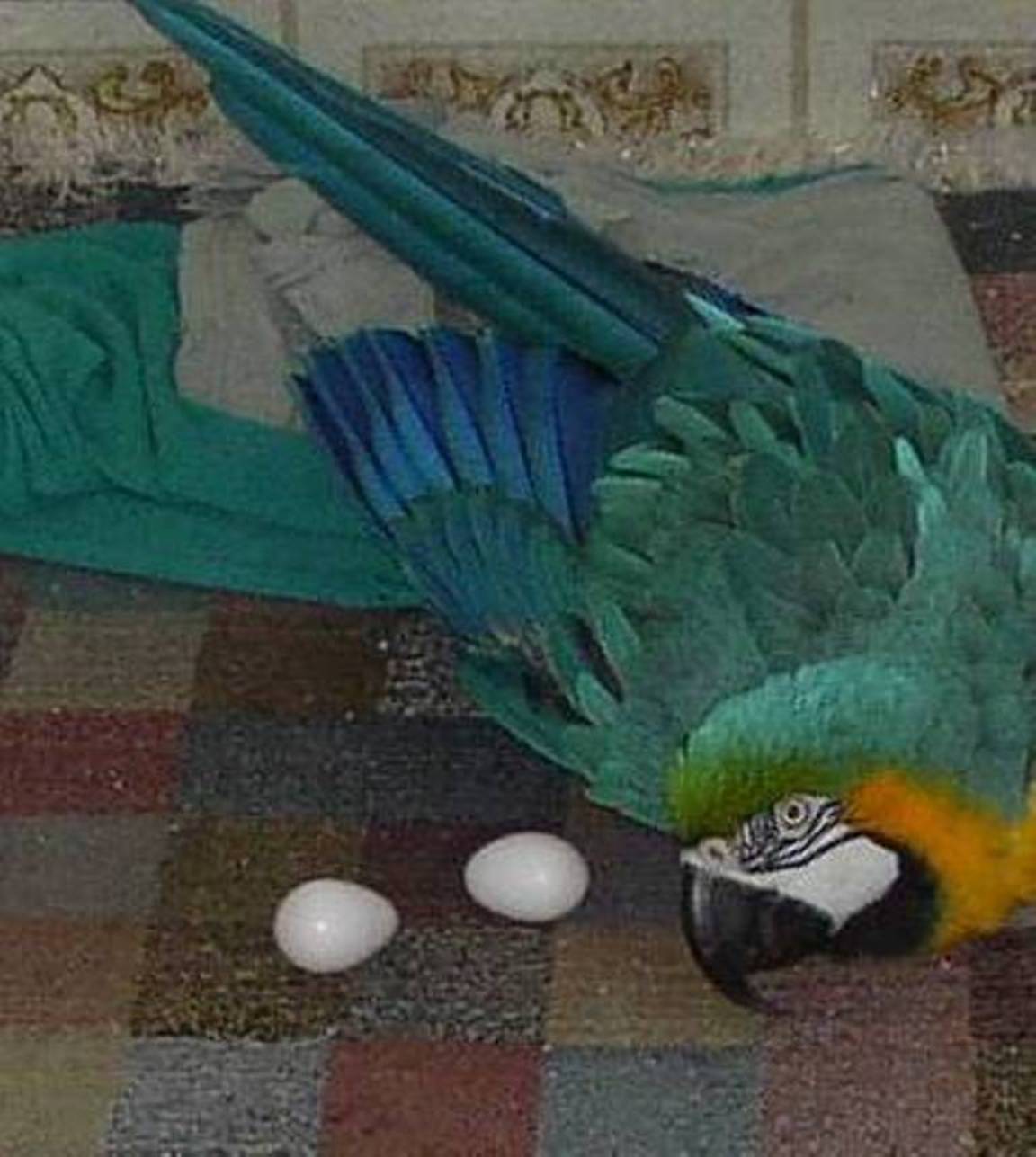
Our female Congo African grey parrot Arua has recently engaged in some unusual activity, for her. We're guessing this activity is hormonal:
Do any of you parrot people have any thoughts about this behavior? Please let us know what you think, and we'll share your thoughts on this blog. Have you witnessed your parrots doing anything similar? If you have, is it an occasional occurrence, or frequently recurring?
Do any of you parrot people have any thoughts about this behavior? Please let us know what you think, and we'll share your thoughts on this blog. Have you witnessed your parrots doing anything similar? If you have, is it an occasional occurrence, or frequently recurring?
Thursday, December 29, 2011
World's Only Rock Band Fronted by a Parrot
Hatebeak


Hatebeak is strictly a studio project. No live music. No tours. We can just imagine the complications of trying to tour with an African grey parrot. Blake and Mark are accomplished studio engineers. Thanks to the power of modern digital recording technology, Waldo’s spontaneously-timed squawks and poetic lyrics could be captured and fine-tuned. Breaking out of the traditional confines of melody, Waldo creates a new vocal language.
The band is signed to the Baltimore hardcore label Reptilian Records. So it's Death Metal. We went through a Heavy Metal phase years ago. You're probably wondering what a Death Metal band sounds like? We were too. Their sound is described as "a jackhammer being ground in a compactor." Ready for this? Here goes:
Beak of Putrefaction, Released 2004
Bird Seeds of Vengeance, Released 2005
Feral Parrot, Released 2007
We find the music strangely mesmerizing. Not sure if that's the sign of a deranged mind. Or what? But if you still can't get enough, Hatebeak has a new album in the works, The Number of the Beak. No word yet on the release date.
Monday, October 24, 2011
Wild Parrots Should Stay Wild!
The desire to fly is an idea handed down to us by our ancestors who... looked enviously on the birds soaring freely through space...
on the infinite highway of the air.
Wilbur Wright
on the infinite highway of the air.
Wilbur Wright
Recently Audubon Magazine summarized the illegal parrot trade still ongoing today:
The business of exotic pets is poorly regulated and enormously profitable: Interpol values the illegal animal trade at $10 billion dollars, placing it just behind guns and drug trafficking in profitability. This illicit industry is believed to have contributed to the threatened status of 66 parrot species and the extinction of brilliant blue Spix’s Macaw.
At the least the illegal parrot trade threatens the biodiversity of parrot species, and at worst may result in the extinction of many parrot species within our lifetimes!

Mr. Cracker is a wild-caught Ruby macaw believed to be about 40 years old. Does Mr. Cracker dream of flight when he's flapping his wings in the house?


For too many parrots the gruesome reality of the companion parrot trade is a transport box at the hands of wildlife poachers with small chance of survival!
Wild parrots should stay wild! The best way to preserve wild populations of parrots is to halt the commercial breeding and sales of companion parrots. The companion parrot market only encourages the poaching of wild parrots. We have a simple credo when it comes to companion parrots:
Parrots: Don't Breed! Don't Buy! Adopt!

For me, the sight of a Parrot living alone, living in a cage, deprived of flight and miserably bored, breaks my heart. And the Parrot's too perhaps.
Dr. Jane Goodall.
Sunday, July 24, 2011
Do Parrots Dream?
We were jolted awake this morning at about 5:30 am with the sound of a humongous thump, followed by the furious flapping of wings. Just getting light enough to see, we scrambled out of bed to check all the parrot cages to see which parrot fell off its perch. We found our female Blue and Gold macaw Miss Bubba Boy clinging to the side of her cage, quite agitated and somewhat disoriented. We suspect that a bad dream caused her to fall off of her perch.

Which got us thinking while we were trying to fall back to sleep (just who wants to get up at 5:30 am on a Sunday, really!). Do parrots dream?
It is pretty well established that parrots are capable of cognitive reasoning. Parrots can carry out actions purposefully, and they are capable of quite sophisticated problem solving. So it would not be any surprise to us that parrots dream and even suffer nightmares.
Although the episode this morning was a first for our female Blue and Gold macaw, this was not the only time we've been jolted out of bed in the dead of night by one of the parrots falling off its perch. Of our eight parrots, three have experienced falling off their perches during the night. Other than Miss Bubba Boy, our Greenwing macaw and Diva parrot Roxanne,

as well as our female Congo African grey parrot Arua, have fallen off their perches during the night on multiple occasions.


Our female Blue and Gold macaw Miss Bubba Boy enjoying apple cider at the
Ballard Farmers Market.
Which got us thinking while we were trying to fall back to sleep (just who wants to get up at 5:30 am on a Sunday, really!). Do parrots dream?
It is pretty well established that parrots are capable of cognitive reasoning. Parrots can carry out actions purposefully, and they are capable of quite sophisticated problem solving. So it would not be any surprise to us that parrots dream and even suffer nightmares.
Although the episode this morning was a first for our female Blue and Gold macaw, this was not the only time we've been jolted out of bed in the dead of night by one of the parrots falling off its perch. Of our eight parrots, three have experienced falling off their perches during the night. Other than Miss Bubba Boy, our Greenwing macaw and Diva parrot Roxanne,

Our Greenwing macaw and Diva parrot Roxanne, named for the song.

Our female Congo African grey parrot Arua, just hanging out!
We wonder if birds with greater brain power such as African greys are more prone to dreaming than other birds? We have thought that possibly the parrots were startled during the night by some sound coming from outside the house which may have caused them to fall of their perches. But in at least two cases we can recall, we were wide awake in the night when the falling episode occurred, so we can rule out external causes.
Other times we'll be lying awake in the dark of night and hear one of the parrots start to vocalize. Our male Blue and Gold macaw Aboo will softly start speaking to himself, in a voice barely audible.

Our male Blue and Gold macaw Aboo playing with our Hyacinth macaw Princess Tara.
Is he talking in his sleep. We'll hear our foster Ruby macaw Mr. Cracker laughing out loud in the middle of the night. Is he reliving a prior event in his dreams. Old enough to be a possibly wild-caught macaw, we wonder if he's dreaming of his life before? Mr. Cracker will also on occasion start up a conversation with himself.

Our foster Ruby macaw Mr. Cracker is old enough to be a wild-caught macaw.
And then there was the night we were awakened by our female Blue and Gold macaw Miss Bubba Boy laughing maniacally in the dead of night as if she were an ax murderer ready to commit a crime. Needless to say, we didn't get out of bed!
So, what do you think? Do parrots dream? We think so. And unfortunately experience nightmares as well. If you have any experiences with your parrots dreaming, please share them with us.
Wednesday, June 29, 2011
Bathing Your Parrots

Our female Congo African grey parrot Arua loves to bathe in her water dish. Taking a shower? Not so much.
Some parrots love to bathe. Some parrots would rather not. Bathing is an essential part of feather care and maintenance. Most parrots and other birds naturally take to the water to bathe. Just try keeping your outside bird bath full during those hot summer days! Some parrots are highly particularly about how they bathe. Other parrots are not. Be thankful if you have a parrot that belongs to the latter category. If the former category, just keep plenty of towels and wipes handy. It's another problem entirely if you have a parrot that refuses to bathe. Then you'll need to experiment with different solutions to try to encourage the parrot to dip its toes in the water.
Of our eight parrots, four of our five macaws love to take showers with us, perched on our hands and arms in the bathtub. Our foster Ruby macaw Mr. Cracker probably would as well, if we could get him to step up. Instead, he prefers to bathe in his water dish. Somewhat modest, he doesn't like people watching him bathe, so if we're in the room when he wants to take a bath, he'll politely pipe up with a Bye, Bye, until we get the message, and leave the room.
Our male Goffin's cockatoo Kid Kadra loves to bathe and would probably take a bath daily if we were up to it. His preference is a spray bottle on the shower rail in the bathroom. Barring that, he'll sit on the shower rail and bathe in the spray of the macaws taking showers.
As our male Goffin's cockatoo Kid Kadra demonstrates, sometimes a bath just needs the right soundtrack! If a shower is not in the offing, maybe a parrot just needs to settle for a soak in the nearest tub, or water dish, especially on those hot summer days:
Our female Timneh African grey parrot Tillie will tolerate a spray bottle on the shower rail. Usually she'd rather not. On those occasions that Tillie will take a bath, she can get quite animated:
On those rare occasions when Tillie really really wants to bathe, no parrot enjoys a bath as much as she does!
For sheer entertainment value, we can't beat our female Congo African grey parrot Arua. Arua loves to bathe. But in her water dish, not the shower. She's very large for an African grey. Our avian vet Tracy Bennett called her fat the very first time she met Arua, but that's another story entirely. Plus, her water dish is very small. A Number 1 Fenix crock. That's a lot of parrot in a confined space. Much water displacement:
We've tried putting out large water dishes and trays for her to bathe in. She ignores them. So now, when she jumps into her water dish, we just lay out the towels along the side of her cage.
If you have a parrot resistant to taking a bathe, two things you can try. If you can take a cage outside on the porch or in the yard on a warm day, let a hose spray across part of the cage, but leave room for the parrot to retreat to if the bird doesn't want to get wet, or wants to get out of the water. If you're not able to take the parrot outside, get a parrot perch for your shower, and let the shower flow over part of the perch so the parrot can choose to take a dip or not. Just keep trying different methods until you find one that works for your parrot.
Of course, some of our parrots will tell you that the best part of any shower is the blow dry following the shower!
Our male Blue and Gold macaw Aboo is a cowboy when it comes to taking baths. He'd rather not, until he becomes so gamey even he can't stand it. But the blow dry? Just loves it!
Happy Bathing!
Monday, June 13, 2011
How Does Your Parrot Communicate With You?
How do you communicate with your parrot? More importantly, how does your parrot communicate with you? How does your parrot for example, tell you when he or she is hungry or thirsty? With our parrots it's simple. They tell us. In plain English! At least some of them do.

When our female Congo African grey parrot Arua wants food she tells us: Apple. This is actually a change from her original word for food: Hot. So when it comes dinner time she starts asking for Apple. And when we give her her food dish, she confirms that it is in fact Apple. Of course Apple, or even Hot, is certainly better than the extreme pressure that she used to put on us when we were fixing birdie meals, when she would insistently repeat: You Done Yet?

Our male Blue and Gold macaw Aboo draws a distinction between people food and parrot food. When he wants people food Aboo says: Hot. When Aboo wants parrot food he says: Crack. Presumably Crack is short for cracker, and not the other thing. But Aboo is a rescue bird, so no telling! When Aboo is thirsty, he occasionally says: Water.

Our female Blue and Gold macaw Bubba Boy (no, we didn't name her) also tends to say Hot when she wants to be fed. Makes us curious if they learned this word independently of each other, or learned it from each other. We're pretty sure Aboo started saying Hot when asking for food before the others picked it up.

Sometimes but not always, our foster Ruby macaw Mr. Cracker simply says: Food when he wants food. No mistaking his meaning there. Mostly when he's hungry he dances for his food. If he's really hungry he starts whacking his treat box.
Since we originally posted this story, Mr. Cracker has come up with a new phrase we've never heard before, and almost a complete sentence by macaw standards. We like to sleep in on weekends. One Saturday morning recently we awoke to Mr. Cracker calling out several times: Cracker. Food. Come here! Nothing like waking up to a demanding macaw.

A lady of few words, our Hyacinth macaw Princess Tara will on a rare occasion say Water when asking to drink water from the kitchen faucet. We all know that the best water in the house comes from the kitchen faucet! When she's hungry and wants to be fed she just starts honking, and anyone who's been around a honking Hyacinth macaw knows how ear-splitting that can be!
So that's five out of eight parrots in our flock that can actually ask for food or water by simply asking for food or water! So how about you? How do your parrots communicate to you that they are hungry or thirsty? Or any of their other needs and desires. Both of our Blue and Gold macaws for example, say Let Out, or Let Me Out when they want out of their cages.

Of course we're partial to our littlest parrot, our female Timneh African grey Tillie. When she wants our attention she doesn't scream or honk. She just pipes up in the sweetest little voice and says: Hi Sweetie! It's Me!

When our female Congo African grey parrot Arua wants food she tells us: Apple. This is actually a change from her original word for food: Hot. So when it comes dinner time she starts asking for Apple. And when we give her her food dish, she confirms that it is in fact Apple. Of course Apple, or even Hot, is certainly better than the extreme pressure that she used to put on us when we were fixing birdie meals, when she would insistently repeat: You Done Yet?

Our male Blue and Gold macaw Aboo draws a distinction between people food and parrot food. When he wants people food Aboo says: Hot. When Aboo wants parrot food he says: Crack. Presumably Crack is short for cracker, and not the other thing. But Aboo is a rescue bird, so no telling! When Aboo is thirsty, he occasionally says: Water.
Our female Blue and Gold macaw Bubba Boy (no, we didn't name her) also tends to say Hot when she wants to be fed. Makes us curious if they learned this word independently of each other, or learned it from each other. We're pretty sure Aboo started saying Hot when asking for food before the others picked it up.

Sometimes but not always, our foster Ruby macaw Mr. Cracker simply says: Food when he wants food. No mistaking his meaning there. Mostly when he's hungry he dances for his food. If he's really hungry he starts whacking his treat box.
Since we originally posted this story, Mr. Cracker has come up with a new phrase we've never heard before, and almost a complete sentence by macaw standards. We like to sleep in on weekends. One Saturday morning recently we awoke to Mr. Cracker calling out several times: Cracker. Food. Come here! Nothing like waking up to a demanding macaw.

A lady of few words, our Hyacinth macaw Princess Tara will on a rare occasion say Water when asking to drink water from the kitchen faucet. We all know that the best water in the house comes from the kitchen faucet! When she's hungry and wants to be fed she just starts honking, and anyone who's been around a honking Hyacinth macaw knows how ear-splitting that can be!
So that's five out of eight parrots in our flock that can actually ask for food or water by simply asking for food or water! So how about you? How do your parrots communicate to you that they are hungry or thirsty? Or any of their other needs and desires. Both of our Blue and Gold macaws for example, say Let Out, or Let Me Out when they want out of their cages.

Of course we're partial to our littlest parrot, our female Timneh African grey Tillie. When she wants our attention she doesn't scream or honk. She just pipes up in the sweetest little voice and says: Hi Sweetie! It's Me!
Sunday, December 5, 2010
Exercising Your Parrot

Our Hyacinth macaw Princess Tara flying in place upside down!
Too many parrots become perch potatos. Exercise is as important to parrots as it is to people. Probably even more for parrots. Wild parrots fly. Every day. Many (if not most) pet parrots simply sit in or on their cages every day. All day. The best aerobic exercise a parrot can get is flying. Even flying in place, as our foster Ruby macaw Cracker demonstrates:
Seven of our eight parrots are flighted, Two of our parrots, our Congo African grey Arua, and our Goffin's cockatoo Kid Kadra, fly regularly in our house. Two of our other parrots, our Hyacinth macaw Princess Tara and our foster Ruby macaw, Mr. Cracker, use their wings to fly in place. Princess Tara occasionally also flies in the house. Watching a Hyacinth macaw with a four foot wingspan pivot midair on her wing tip is a sight to behold!
Letting parrots fly, especially large parrots like cockatoos or macaws, presents risks. We feel that letting pet parrots fly outside, except in an enclosed flight aviary, presents risks to the parrot that can not be managed.safely. Therefore, we can not endorse flying pet parrots outside. There are still risks to flying pet parrots indoors, but these risks can be managed. If you wish to learn more about flying parrots indoors, and are wondering if this is something you want to encourage your parrot to do, there is a website you can visit with information about the risks and benefits of flying parrots indoors; Living With Flighted Parrots.
Meanwhile, even if your parrot isn't inclined to fly indoors, encourage your parrot to fly in place.
You'll have a healthier and happier parrot!
Sunday, January 24, 2010
Our Flock: Our Congo African Grey Parrot Arua
A fascinating aspect of having African grey parrots in the household is the ubiquitous background noise they provide. Unlike macaws or even cockatoos they always seem to be vocalizing. Anyone with an African grey parrot probably doesn't realize how much they enjoy the constant noise until they lose it. When our first Congo African grey parrot Corky died from heart failure in March of 2006 we faced the sudden quiet in the household, even with four macaws and a Goffin's cockatoo. We knew we wanted another Congo African grey.


Within a month we came across an unusual Craigslist posting for a female Congo African grey parrot which had lost its owner and needed to find a good new home quickly. The parrot was hiding in an apartment complex hoping the management wouldn't find out. We went to visit the parrot in its hideout, and it was love at first sight! The parrot came home with us.
Our Congo African grey parrot Arua, her first day home with us, April 2, 2006.
Arua is a confirmed female Congo African grey parrot (Psittacus erithacus). Arua is a very large grey. The average weight for an adult Congo African grey is 400 grams. On her first visit to our avian veterinarian, Arua weighed in at about 480 grams. On first seeing her, our vet called Arua a fatty!
When we acquired Arua, she was believed to be about ten years old. Her owner was a Polish fellow living in Spokane, who passed away on New Year's Eve of 2005. Apparently he was not found for three days. We believe his name may have been Oliver, because that is a name Arua frequently repeated when she came to us (she never says the name any more). A Polish lady in Everett, Washington, brought the bird back from Spokane, and that is how she came to us, via Craigslist. In her first year or so with us Arua said many words we did not understand but which we believe were Polish. It's been awhile since she's repeated any foreign words. The only reason we know Arua is her name is because she constantly and consistently calls herself by that name.

Just hanging out. Arua is one acrobatic parrot!
Arua is our one parrot that not only knows her name, but knows the name of every member of the flock in this household, parrot or human. She says: Hi Hope. It took her awhile to get Michael correct. For the longest time it was Ickle! She knows Rox or Roxanne, Bubba, Boo (Aboo), Tara, and Tillie. The only parrot whose name she refuses to say is that of our Goffin's cockatoo Kid Kadra. She does not like Kid, who harasses her given the chance, and she ignore's him.

Arua tolerating a bath. Arua does not like showers, but prefers to bathe in her water dish.
Arua is one of the friendliest Congo African grey parrots we've encountered. Although she has a slight disposition for females over males, she will readily step up with just about anyone. Since she joined our flock she has developed her flying skills. Our first Congo African grey parrot Corky flew like a lead brick, but not Arua. Arua's flight feathers were clipped when she first came to us, but we let her flight feathers grow out, and her flying skills have improved from her first noticeably labored attempts to now being a competent flier. No doubt she has been encouraged to improve her flying skills because of the aerial harassment she gets from our Goffin's cockatoo, Kid Kadra. Initially if Arua wanted to get anywhere in the house she'd climb off her cage and trudge across the floor. She still hikes around, but now she's just as inclined to fly to her desired destination as walk.
In addition to her usual African grey vocalizations, Arua has a well defined speaking voice. We no longer hear any Polish words, but she continually speaks and continues to pick up English words and phrases. Interestingly, she tends to pick up words and phrases from the male of the house, but virtually nothing from the female of the house. I taught her to say Michael correctly, and I'm trying to teach her to say Don't break the door! That was a phrase our first Congo African grey Corky favored. Just like Corky, Arua will slam her cage door closed, at which time we say Don't break the door! A couple of Arua's favorite phrases are: Whacka Whacka, and Whoop De Doo! When she wants something to eat, she'll say: Who wants a cracker? If she wants more food, she'll say: You want more? She'll let us know if the food is Hot! Arua is a hard taskmaster. If she thinks a meal is taking too long to prepare, she'll scold: Are you done yet? She's always warning us to: Watch your tail! Or Watch your toe! Since our Timneh African grey parrot Tillie joined our flock, she's constantly admonishing us to Watch our Tillie! She likes Tillie. Alot.Sometimes she threatens us by exclaiming: I'll get your tail! When we make coffee, she offers the helpful suggestion: Add more water. Of course, she farts and burbs, occasionally comes down with a bad cough, and has a sneeze so fierce it's a wonder she doesn't fall off her perch. She's often wrestling with her toys, hanging upside down and whacking her bells. We warn her to be careful or she'll fall down and go boom. Sometimes she does. Invariably, she'll pick herself up, climb back up, and go right back to it.
In addition to her usual African grey vocalizations, Arua has a well defined speaking voice. We no longer hear any Polish words, but she continually speaks and continues to pick up English words and phrases. Interestingly, she tends to pick up words and phrases from the male of the house, but virtually nothing from the female of the house. I taught her to say Michael correctly, and I'm trying to teach her to say Don't break the door! That was a phrase our first Congo African grey Corky favored. Just like Corky, Arua will slam her cage door closed, at which time we say Don't break the door! A couple of Arua's favorite phrases are: Whacka Whacka, and Whoop De Doo! When she wants something to eat, she'll say: Who wants a cracker? If she wants more food, she'll say: You want more? She'll let us know if the food is Hot! Arua is a hard taskmaster. If she thinks a meal is taking too long to prepare, she'll scold: Are you done yet? She's always warning us to: Watch your tail! Or Watch your toe! Since our Timneh African grey parrot Tillie joined our flock, she's constantly admonishing us to Watch our Tillie! She likes Tillie. Alot.Sometimes she threatens us by exclaiming: I'll get your tail! When we make coffee, she offers the helpful suggestion: Add more water. Of course, she farts and burbs, occasionally comes down with a bad cough, and has a sneeze so fierce it's a wonder she doesn't fall off her perch. She's often wrestling with her toys, hanging upside down and whacking her bells. We warn her to be careful or she'll fall down and go boom. Sometimes she does. Invariably, she'll pick herself up, climb back up, and go right back to it.
Thursday, November 26, 2009
Training Your Parrot to Play With Cheap Toys
Isn't it always the case? You spend dollars and dollars on toys for your kids, and all they want to do is play with the box! With this new economy, we want to save money while keeping our kids entertained, so we're always looking for parrot safe, inexpensive and readily available toys. Our first Training Your Parrot to Play With Cheap Toys YouTube video, featuring our Timneh African Grey parrot Tillie, focused on an item we realized we shouldn't be throwing away: plastic bottle caps. This is far and away our most viewed YouTube video. So, to make this a series, we produced another YouTube video, Training Your Parrot to Play With Cheap Toys: Paper Bags. This makes the answer to the question: Paper or Plastic? simple. This new YouTube video features our Hyacinth Macaw parrot Princess Tara, and our Congo African Grey parrot, Arua:
To make it easy to view the original Training Your Parrot to Play With Cheap Toys YouTube video, we've added it here. Training Your Parrot to Play With Cheap Toys: Bottle Caps:
To make it easy to view the original Training Your Parrot to Play With Cheap Toys YouTube video, we've added it here. Training Your Parrot to Play With Cheap Toys: Bottle Caps:
Since our parrots usually prefer to play with the containers rather than the contents, we produced yet another Training Your Parrot to Play With Cheap Toys YouTube video, featuring our Timneh African grey parrot Tillie: Training Your Parrot to Play With Cheap Toys: Cardboard Boxes. Our smaller parrots especially love chewing up cereal boxes and tissue boxes, although any cardboard container is popular with our flock, including toilet paper rolls. Just be sure they are not covered in glue. Inspect the material before giving it to your parrots, and if in doubt just toss it out! Something to watch out for, however, is nesting behavior. You want to be sure your parrots are playing with the boxes, and not trying to build a nest. For more about the topic of nest building, see our blog post about our female Blue and Gold macaw, Miss Bubba Boy: Our Flock: Bubba's Brood.
We're always anxious to hear about any other ideas for great, cheap, and readily available parrot toys. Got an idea? Please share it with us.
Subscribe to:
Posts (Atom)

