Showing posts with label Training Your Parrot. Show all posts

Monday, June 13, 2011

How Does Your Parrot Communicate With You?

How do you communicate with your parrot? More importantly, how does your parrot communicate with you? How does your parrot for example, tell you when he or she is hungry or thirsty? With our parrots it's simple. They tell us. In plain English! At least some of them do.


When our female Congo African grey parrot Arua wants food she tells us: Apple. This is actually a change from her original word for food: Hot. So when it comes dinner time she starts asking for Apple. And when we give her her food dish, she confirms that it is in fact Apple. Of course Apple, or even Hot, is certainly better than the extreme pressure that she used to put on us when we were fixing birdie meals, when she would  insistently repeat: You Done Yet?


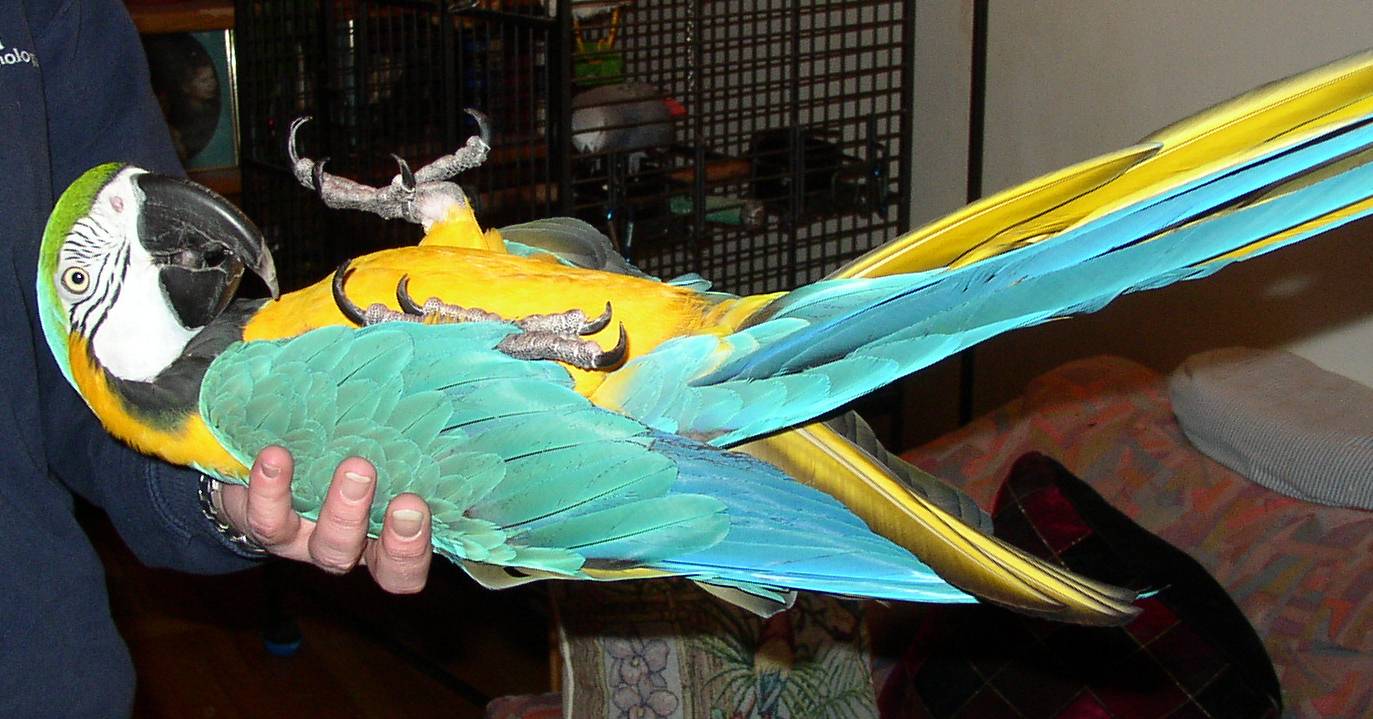
Our male Blue and Gold macaw Aboo draws a distinction between people food and parrot food. When he wants people food Aboo says: Hot. When Aboo wants parrot food he says: Crack. Presumably Crack is short for cracker, and not the other thing. But Aboo is a rescue bird, so no telling! When Aboo is thirsty, he occasionally says: Water.
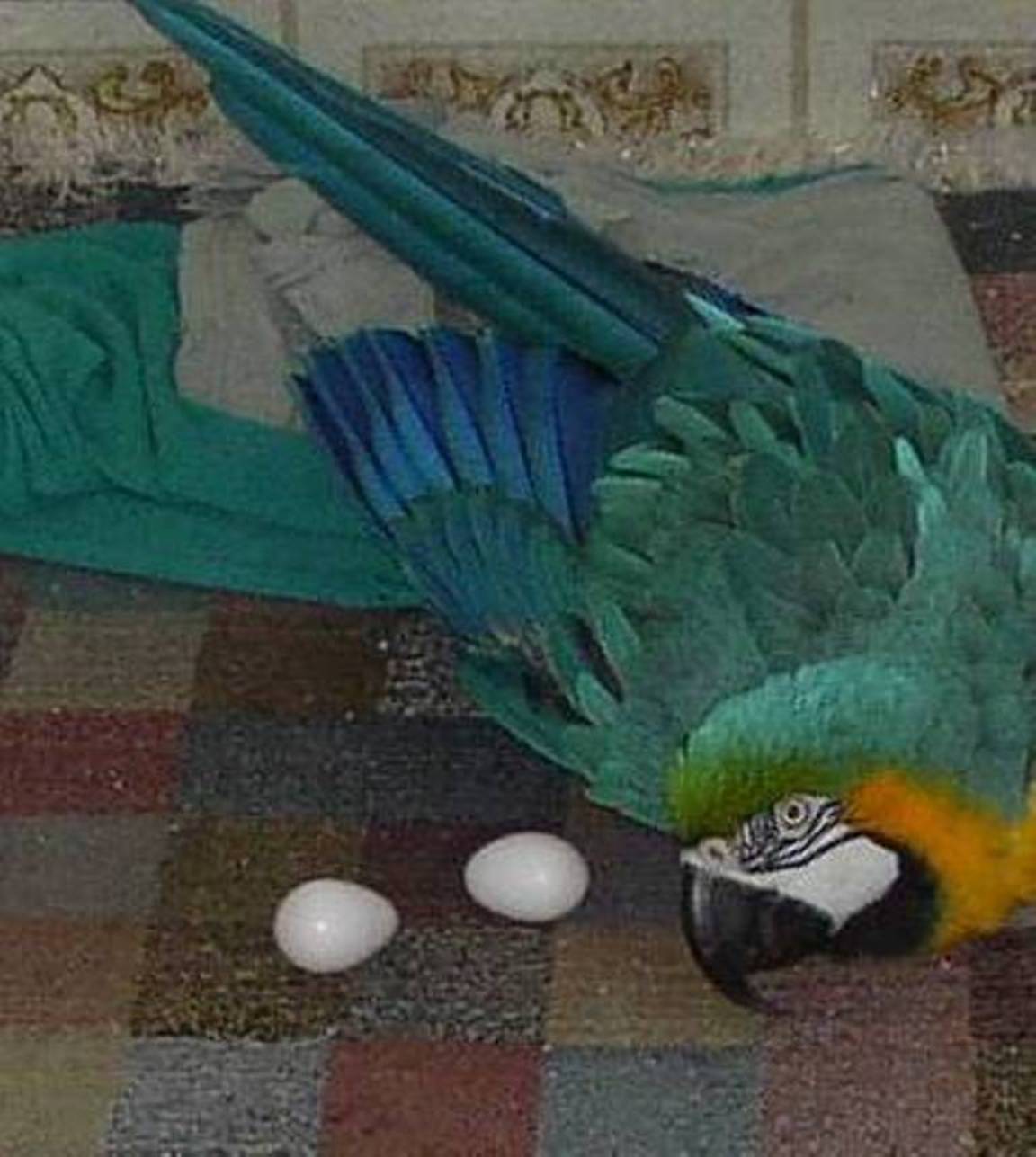

Our female Blue and Gold macaw Bubba Boy (no, we didn't name her) also tends to say Hot when she wants to be fed. Makes us curious if they learned this word independently of each other, or learned it from each other. We're pretty sure Aboo started saying Hot when asking for food before the others picked it up.


Sometimes but not always, our foster Ruby macaw Mr. Cracker simply says: Food when he wants food. No mistaking his meaning there. Mostly when he's hungry he dances for his food. If he's really hungry he starts whacking his treat box.


Since we originally posted this story, Mr. Cracker has come up with a new phrase we've never heard before, and almost a complete sentence by macaw standards. We like to sleep in on weekends. One Saturday morning recently we awoke to Mr. Cracker calling out several times: Cracker. Food. Come here! Nothing like waking up to a demanding macaw.


A lady of few words, our Hyacinth macaw Princess Tara will on a rare occasion say Water when asking to drink water from the kitchen faucet. We all know that the best water in the house comes from the kitchen faucet! When she's hungry and wants to be fed she just starts honking, and anyone who's been around a honking Hyacinth macaw knows how ear-splitting that can be!


So that's five out of eight parrots in our flock that can actually ask for food or water by simply asking for food or water! So how about you? How do your parrots communicate to you that they are hungry or thirsty? Or any of their other needs and desires. Both of our Blue and Gold macaws for example, say Let Out, or Let Me Out when they want out of their cages.


Of course we're partial to our littlest parrot, our female Timneh African grey Tillie. When she wants our attention she doesn't scream or honk. She just pipes up in the sweetest little voice and says: Hi Sweetie! It's Me!

Sunday, December 5, 2010

Exercising Your Parrot

Our Hyacinth macaw Princess Tara flying in place upside down!


Too many parrots become perch potatos. Exercise is as important to parrots as it is to people. Probably even more for parrots. Wild parrots fly. Every day. Many (if not most) pet parrots simply sit in or on their cages every day. All day. The best aerobic exercise a parrot can get is flying. Even flying in place, as our foster Ruby macaw Cracker demonstrates:


Seven of our eight parrots are flighted, Two of our parrots, our Congo African grey Arua, and our Goffin's cockatoo Kid Kadra, fly regularly in our house. Two of our other parrots, our Hyacinth macaw Princess Tara and our foster Ruby macaw, Mr. Cracker, use their wings to fly in place. Princess Tara occasionally also flies in the house. Watching a Hyacinth macaw with a four foot wingspan pivot midair on her wing tip is a sight to behold!


Letting parrots fly, especially large parrots like cockatoos or macaws, presents risks. We feel that letting pet parrots fly outside, except in an enclosed flight aviary, presents risks to the parrot that can not be managed.safely. Therefore, we can not endorse flying pet parrots outside. There are still risks to flying pet parrots indoors, but these risks can be managed. If you wish to learn more about flying parrots indoors, and are wondering if this is something you want to encourage your parrot to do, there is a website you can visit with information about the risks and benefits of flying parrots indoors; Living With Flighted Parrots.


Meanwhile, even if your parrot isn't inclined to fly indoors, encourage your parrot to fly in place.


You'll have a healthier and happier parrot!

Thursday, November 25, 2010

Living With Parrots: Parrot Blogs


All parrot care should be this easy! Our male Blue and Gold macaw Aboo was abandoned because he was considered unmanageable and unhandleable!

As Patricia Sund of Parrot Nation says: Parrots are "one hell of a lot of work." Whether you have one parrot or an aviary, where do you go to find useful and up to date information regarding positive parrot care and training? As a service to conscientious parrot owners, we are attempting to compile in one place links to the best parrot people currently writing and blogging about parrot care and training. If we have overlooked any parrot writers and bloggers you know of and follow, please let us know so we can add them as well. There is also a community of parrot writers who blog about parrot and wildlife conservation, many affiliated with The World Parrot Trust. We will leave these writers and bloggers for a later blog post.

We'll start with the generalists, and then move on to the specialists:

Living With Parrots

Patricia Sund with two of her Congo African Grey parrots

Since we already quoted her, we'll start with Patricia Sund's Parrot Nation. Patricia Sund's blog encompasses the world of aviculture, and especially the part of the world in which she lives with three African grey parrots in her Florida home.

Shadow, Katherine Rawson's Nanday Conure

Katherine Rawson is a writer and blogger who lives with a Nanday conure, Shadow. Shadow's blog is The Parrot's Point of View. Katherine has published the picture book, If You Were a Parrot.


Betty Jean Craige's female Congo African Grey Cosmo

Betty Jean Craige is a professor at the University of Georgia who lives with a gregarious Congo African Grey parrot named Cosmo, who has published her own book, Conversations With Cosmo.

Rosie Red Bottom: A Comedian With Feathers

From Georgia we travel 6,000 miles across the continent to Alaska where a parrot writer named Donna Hart Mann lives with her Congo African Grey parrot named Rosie Red Bottom and a Cockatiel named Percy. Donna documents her life with Rosie and Percy in her blog African Grey Parrot. Donna recently published a book about Rosie, Rosie Red Bottom: A Comedian With Feathers.

Bryan Xie's Black Capped Conure Kacy

Even farther afield, we travel to Singapore where Bryan Xie lives with his three parrots, Kacy the Black Capped Conure, Kermit the Senegal, and Kiki, an African lovebird. Bryan blogs about life with his companion parrots, including their care and training, on his blog Bryan's Angels.

Coco, a cage free Yellow Crowned Amazon parrot

Robin Cherkas lives in Ashville, North Carolina where she writes the blog Living With Parrots Cage Free, documenting her life with her cage free Yellow Crowned Amazon parrot Coco. As Robin tells me, while she's touched on virtually every topic imaginable regarding parrots and parrot care, her blog's primary focus is simply living with a cage free parrot, the symbiotic relationship between parrot and companion, teaching both the parrot and companion behavior/life skills that promote this harmonious relationship and parrot empowerment.

Rebecca O'Connor with one of her flock mates

In addition to being a parrot person, Rebecca O'Connor is a conservationist, falconer, and writer who lives in Sacramento with her flock including Ty, an African Grey parrot, Bali, a Red-Bellied Parrot, Loki, a Senegal, as well as two falcons and a Brittany. Rebecca writes about her flock on her blog, Heckled by Parrots. Rebecca has documented her career in falconry in her recent memoir Lift: A Memoir. We await a sequel about her life with parrots!

No doubt we have overlooked many parrot bloggers. Please forward their names to us so they can be added. From the generalists we will turn to the specialists. A future blog post will focus on parrot writers blogging about parrot care, training, nutrition, and flying. Stay tuned!

Sunday, March 14, 2010

Training Your Parrot to Play With Cheap Toys: Paper Rolls

Our latest Training Your Parrot YouTube video features our Diva Parrot and Greenwing macaw Roxanne demonstrating a parrot playing with paper rolls, aka cash register tape. This YouTube video features outtakes from Roxanne's Parrot Soliloquy YouTube videos, so you'll hear the sound of the laundry room dryer in the background:

Just a word of caution: There are many kinds of paper rolls available. If you do use cash register tape, be sure to use Non-Thermal paper.

For viewers convenience, we are adding our earlier Training Your Parrot to Play With Cheap Toys YouTube videos following, starting with cardboard boxes:

As well as paper bags:


And our first and still most popular Training Your Parrot to Play With Cheap Toys YouTube video, featuring our Timneh African grey parrot Tillie playing with bottle caps:


Enjoy! We're always happy to hear about any suggestions for cheap parrot toys for future YouTube videos.