Sunday, June 23, 2013

If At First You Don't Succeed

Sometimes, perseverance pays off. At least our Congo African Grey parrot Arua seems to believe so. If there's a will. There's a way. Or something like that.


Our Congo African Grey parrot Arua is the spokesparrot for TheParrotCafe.com's very own Red Tail Brand Ethiopia Sidamo coffee. Celebrating Ethiopia, the Birthplace of Coffee. An African parrot promoting an African coffee.


TheParrotCafe.com Red Tail Brand Coffee Tees

Arua is featured on our official Red Tail Brand coffee tee. Like it?
You can get one here: TheParrotCafe.com Red Tail Brand Coffee Tees

Saturday, June 22, 2013

The Secret Soviet Plot to Bring Down the United States

And It's Been Spectacularly Successful!

Moscow's Red Square. State Historical Museum Center Right

In case you haven't noticed, we haven't posted on our blog The Zen Parrot for several weeks because we've been away on a trip of a lifetime. We've been off to visit the Old Country. Russia, that is.

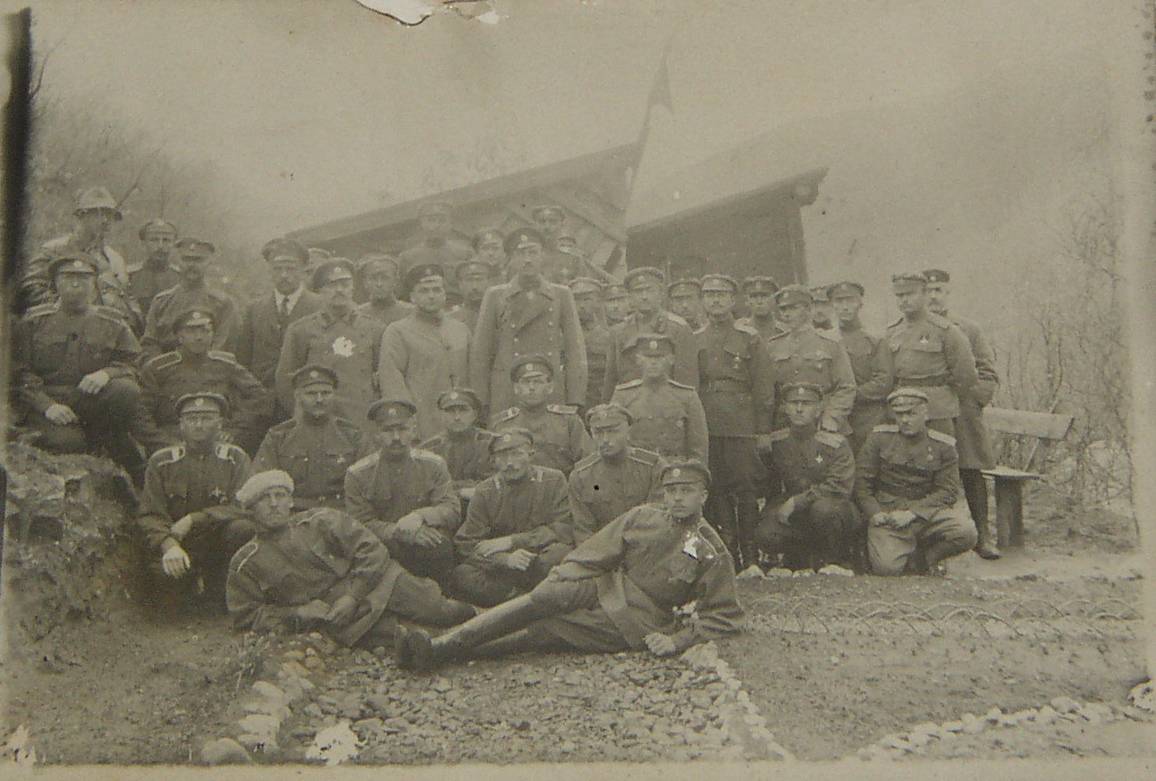
Our family, on our father's side, comes from a long line of fervent monarchists, with a centuries old tradition of serving in the Tsarist military. Our great grandfather Yakov was a high ranking general in the Russian cavalry, as no doubt his father, grandfather, and great grandfather before him were as well. So it was probably to be expected that our grandfather Vasily would himself become a cavalry officer.

Grandfather Captain Vasily Front Right (in Cavalry Boots) Fighting the Bolsheviks

Unfortunately the grandparents passed away before we were ever old enough to appreciate their background and history. Our parents professed to know little about it. So we had the dream of traveling to Russia some day to research our family history and possibly even visit the estate outside of Moscow that our family supposedly came from. Our dream finally came to fruition this past year.

We first visited Russia in 1980 during the darkest days of the Leonid Brezhnev era when the bad old Soviet Union seemed so immutable and unchangeable. Researching Russian archives? Don't even think about it. We went back in 1989 during the heady days of Perestroika, but still faced insurmountable obstacles to accomplishing any actual research on family history.

Moscow's State Historical Museum, Established 1894, With Russian Genealogical Archives

Things are different now. For one thing, money talks. With a little grease we found a willingness to unlock archive doors that previously had been closed to westerners. Plus, it didn't hurt to have a Russian last name. For a month, every day except Tuesdays (for some reason never fully explained to us the museum is closed Tuesdays) we were at the door when it opened at 11:00 am and worked uninterrupted until closing at 7:00 pm.

Meet Dmitry, One of the Moscow State Historical Museum's Archivists

After about three days at the museum, one of the museum's archivists, a jovial chap named Dmitry, invited us to his apartment after closing for drinks. Dmitry called himself an archivist. We would consider him a glorified file clerk. But free drinks? Sure. Drinks at the hotel bar were seriously overpriced. The next evening, he invited us back to his apartment. For a business proposition he explained. Turns out, for the right price, he could provide us historical Russian artifacts to purchase. And even arrange to ship them home to us. Yeah, sure. We really weren't all that interested in commencing a life of crime this late in our lives.

Well, he knew we were legitimate historians (Ph.D. History, University of Idaho, 1993). Plus we could read Russian. How would we like to look at some old Russian documents? Never before seen by western eyes. Just declassified by the Russian government. Might turn into a subject for a book some day. Okay, we couldn't resist. What would it hurt to look?

Most of the material was dry as dirt. Пятилетнего плана Лима Бин Производство в степи Казахстан. Five Year Plan for Lima Bean Production on the Kazakhstan Steppe. Give me a break! Then there was Теория и практика Радиотелеметрия Наблюдения в Узбекистане. Theory and Practice of Radio Telemetry Observations in Uzbekistan. We were beginning to entertain serious doubts about Dmitry. Then came a box labeled Комитет государственной безопасности (КГБ). We just about choked on our кофе (coffee, that is). КГБ in English is KGB. Committee for State Security. The Soviet Secret Police. The outfit that Russian President Vladimir Putin belonged to during the bad old Soviet days. Now we were getting somewhere. We decided it was worth a hundred Euros to get Dmitry to open the lid of this box for us. Euros only. Bastard wouldn't even take dollars.
Old KGB Headquarters Building in Moscow. Home of Lubyanka Prison

The material we saw mostly dealt with KGB operations in East and West Germany and Western Europe. Contracts. Contacts. Lists of this and that.


But one file we pulled out of the box was labeled Сумка проекта Чай. Project Tea Bag. Tea was and still is the Russian national drink. After vodka. When Dmitry saw the file he visibly blanched. Apparently he had some familiarity with Project Tea Bag. He insisted we put our iPhone away and not take any photos of this particular file. We called out to have a pizza delivered before closing. Then Dmitry locked his office door and we sat up all night drinking frozen zubrovka and reading the Project Tea Bag files. By the time the museum opened in the morning the two of us were in pretty sorry shape but we had one hell of a story to tell. Amazingly Dmitry went back to work while I literally crawled across Red Square back to my room at the Hotel Rossiya. I collapsed into bed to vodka-addled dreams of FSB (Federal Security Service, successor to the KGB) agents kicking in the door to arrest me.

To get all the lurid details you'll need to buy the book we're planning to write about this Soviet era operation. Suffice it to say the operation had the three essential ingredients of a blockbuster spy novel: Sex. Drugs. Rock N' Roll. But we'll give you a teaser here.

During the 1980s the Soviet Union was bleeding out from its ill-fated invasion of Afghanistan. Led by the doddering old fool Leonid Brezhnev the empire was on its last legs. Anyone not in the time warp of the Kremlin could see it. Including a high-ranking KGB officer by the name of Vladimir Putin. Yes, that Vladimir Putin. A group of reformist Soviet officials including Putin realized the days of the Old Soviet Empire were numbered. They needed to act fast to neutralize the United States as a threat to Russia. Working with leading scientists and behavioral psychologists at Moscow's Ivan Pavlov Institute they concocted a plan they called Сумка проекта Чай, Project Tea Bag.

The scientists developed subliminal messages they would embed in contemporary American television commercials. These messages would inculcate a deep seated hatred of government in the television audience which the Russians hoped would lead to a popular uprising in America. The behavioral psychologists believed it would take twenty years for this subliminal messaging to take its desired effect. Give or take. Working through government financed Russian holding companies in the West, the Soviet officials began orchestrating ad buys in the mid-1980s, with the final ad buys in 1989. Unfortunately for them the Soviet empire collapsed sooner rather than later. Only decades later would the Russian officials come to realize just how effective Project Tea Bag really was.

With some research we were able to identify a few of the commercials the Soviets concocted. See if you can spot the subliminal messages in these Soda Wars commercials from the 1980s.
(Not to worry. You'd need to watch these continuously over an extended period of time to fear becoming a raving lunatic.)

Not surprisingly no one in the Kremlin would respond for comment to this story. While we were in Moscow we managed to track down one of the former Soviet researchers responsible for these commercials. He responded that the group never really expected Project Tea Bag to amount to much. They thought that the subliminal messaging concocted by the behavioral psychologists would result in adherents taking such radical and absurd positions on political questions of the day that no one would ever take them seriously.

Sunday, May 26, 2013

Parrots: All Things Zygodactyl

Introducing the ezine all about parrots, and mostly just parrots.

Parrots: All Things Zygodactyl

Click on Image to See Contents of Issue

zy·go·dac·tyl

 adjective \ˌzī-gə-ˈdak-təl\

Definition of ZYGODACTYL

: having the toes arranged two in front and two behind —used of a bird

Origin of ZYGODACTYL

International Scientific Vocabulary zyg- + Greek daktylos toe
First Known Use: 1831


Parrots: All Things Zygodactyl is all things parrots. Well okay, woodpeckers and roadrunners too. And some owls are zygodactyl as well. But mostly we just cover the world of parrots. And what a world it is.

There is more to the world of parrots than that little Budgie stuck in its cage in someone's apartment. There are heroes and villains in the world of parrots. There is drama and romance. There are ex-parrots. Parrots encompass every continent except Antarctica. Parrots make up the largest and most diverse group of avians, and parrots are the oldest of the avians. Not only did parrots live with the dinosaurs. Parrots are living dinosaurs! Join us for the adventure as we cover the world of parrots.

Be sure to subscribe to our ezine to receive the latest issues as the digital bits roll out over the Internet. You don't want to miss a single story.

Monday, May 20, 2013

The Downside of Being a Parrot Person

When we saw the kid walking up the sidewalk with a parrot cage in his hand we immediately knew he was headed for our door. No other possible destination. We didn't even wait for the doorbell.


Argentino and Rainbow needed a new home. They couldn't stay in their current home because the people just didn't have time for them any more. Sigh! How many times have we heard that before. That wasn't a question.

They sent the kid over with the Budgies because the parents were probably too embarrassed to deliver the  birds. The kid admitted that the folks even thought about setting the birds free. Yeah, right. Free to do what, exactly? That is a question. At least they came to their senses and remembered the parrot people around the corner. Hard not to know we're here. You can hear the macaws a block away when the windows are open. And we're frequent visitors to the neighborhood park, so the kids know us even if the parents don't. Our Diva parrot and Greenwing macaw Roxanne just loves hanging out at the park with the kids and swinging on the kiddie swings. Needless to say, we're convinced Argentino and Rainbow would have been set loose (we won't say free) if we had not agreed to take the birds.

Rainbow (left) and Argentino

With the ceaseless chatter of a pair of Budgie parrots added to the squawking of our macaws, greys, and one lone cockatoo, we contacted the circle of parrot people our parrot rescue, Northwest Parrots Fund, works with. We quickly found someone to adopt our temporary house guests.

Our road to establishing a parrot rescue group was surprisingly short, and not a route we ever expected to travel when we got our first parrot, Roxanne. Roxanne, named after the Sting song.


You don't have to put on the red light
Those days are over
You don't have to sell your body to the night

We only ever intended to get the one parrot. We got Roxanne back in the last century from a Microsoftie who got divorced, quit his job with Microsoft, and was moving to California with a new girlfriend. The girlfriend gave him an ultimatum. Her or the parrot. In our opinion, he made the wrong choice, but we got Roxanne.

It didn't take long for the neighbors to brand us as the parrot people. Roxanne was so easy going we figured this parrot thing was a piece of cake. So when we heard about a Blue and Gold macaw named Bubba that a retired couple were going to unload on a parrot breeder, we bought the parrot to save her from a life stuck in a barn.

Now we had two parrots. For several years we operated Seattle's original Parrot Cafe. One weekend a lady dropped off a male Blue and Gold macaw named Aboo. She just needed us to watch the bird for the weekend. Okay. What did we look like? An animal shelter? We were a coffee shop for chrissakes, but we said okay anyway. Surprise, surprise! She never came back. The weekend turned into a week. Then a month. We learned from others that Aboo was considered unmanageable and unhandleable. Well, years later Aboo is still with us. Quite manageable and handleable!

We started getting calls from people asking what they could do with the parrots they could no longer care for. We told them definitely not to bring the parrots to the cafe. But we needed to help them find new homes for their birds. We started building a network of parrot people willing to foster or adopt parrots. We helped some people find new homes for their parrots. We even fostered a few parrots while we searched for new homes. We became a de facto parrot rescue. It was only a matter of time before we formalized our work and established a 501(c)3 nonprofit charity, Northwest Parrots Fund, registered as a charity with the State of Washington. The rest of the story, as they say, is the rest of the story. Some other time maybe.

Thankfully, Rainbow and Argentino are settled into their new home with a terrific parrot person who already had two Budgie parrots. Rainbow and Argentino are males. The other two Budgies are females. This should get interesting.

Sunday, May 5, 2013

What Do You Do With a One-Footed Pigeon?

A Moral Conundrum. Or is that redundant?

Definition of CONUNDRUM

1
: a riddle whose answer is or involves a pun
2
a : a question or problem having only a conjectural answer
b : an intricate and difficult problem

Just what do you do with a one-footed pigeon? What can you do? What need you do? Anything? Or simply leave things be? Chalk it up to nature?

This one-footed pigeon has become a regular in our North Seattle back yard, joining the flock of pigeons that usually hangs out around our yard. As you can see from the photo below, the pigeon's right foot is rolled up in a ball and not functional. The pigeon hops around on its good foot, occasionally using its wings for balance.

This pigeon's right foot is severely deformed and rolled into a ball


In all other respects the pigeon seems perfectly healthy and happy, as pigeons go. It will sit on its one good foot and preen itself, like a parrot does. The bird seems to have no problem following and participating with its flock. Other than its foot, it seems to be a perfectly normal wild critter.

We've been told we should try to catch the bird to have the foot examined. But we're not sure how useful capturing the bird would be. If the deformed foot is say, a birth defect, there may not be any fix for the problem. Our inclination is to leave the bird alone. There might be more harm trying to catch the bird than potential benefit to the bird.

We'd love to hear your thoughts and suggestions.

Saturday, April 13, 2013

Organized Gangs of Parrots Ravage Burma

We just love this story! This article, in its entirety, appears in The Irrawaddy, covering Burma and Southeast Asia:

Organized gangs of local parrots in Pegu Division are leading sunflower farmers to despair. In Toungoo Township, farmers are arming themselves with catapults against the birds, which are attacking their crops and eating all the seeds. “These parrots have come in flocks since the previous month and we are always guarding our plantations with catapults,” one of the farmers told state media. It appears the pilfering parrots may have a coordinated plan of attack, sending out scouting parties. “Only one or two parrots come in the morning and afternoon. But they come in flocks in the evening,” he said.


Wow! Raymond Chandler could not have penned a more crisp and succinct paragraph in the whole history of noir crime fiction. This story cries out to be illustrated with blood soaked photographs of ravenous parrot gangs. Of desperate farmers fighting back with slings and arrows and catapults. But sadly, it is not to be. So we will do our best to illustrate this story with words as we attempt to parse the true meaning of this fierce struggle between parrot gangs and desperate farmers.


What in the hell is an Irrawaddy, anyway? We Googled the term to find out that it's apparently Burma's largest river and most important commercial waterway. Okay. That works for us. Guess that's a good name for a website covering Burma and Southeast Asia.


And what's up with this Burma - Myanmar confusion? You call it Myanmar. We call it Burma. It was always Burma when we were growing up.  Just like when you say Beijing we think Peking. But we digress.


Getting back to the blood soaked battles between parrots and pirates. Sorry, parrots and farmers. What do you suppose the farmers arm their catapults with to beat off the parrot hoards? Sticks and stones? Sunflower seeds? Whatever it is, it doesn't appear to be all that effective by the tone of the article.


Oh for some photos! When we first read this article we immediately thought organized gangs of Cockatoo parrots. Goffin's Cockatoos to be precise. Gawddamn juvenile delinquents! We have one, so we know what we're talking about. But probably the wrong continent. More likely the parrots involved are Indian Ringnecks, indigenous to the Indian subcontinent and Southeast Asia. Specifically the Psittacula krameri borealis, or Rose-ringed parakeet native to Burma.


By all accounts, Indian Ringneck parrots are ravaging London and the rest of Britain, so is it no wonder they are overrunning a little podunk country like Burma:


Twenty years ago we never would have encountered a story this wonderful, or bizarre, in our local newspaper. Got to love the Internets!

Saturday, April 6, 2013

If Life Gives You Lemons, Just Make Your Own Beach


However erudite, well mannered, and communicative our parrot companions are with us, especially our African grey parrot companions, they are still wild animals at heart. It would be better for them and us if they were all living their wild lives out in the wilds of Africa, and wherever else they originated. Unfortunately for them and us they are not and never will. So we just have to do the best we can for them. Make their lives as companion parrots as fulfilling, safe, and carefree as it is possible to make. Then we just hope that in our next lives we don't come back as a parrot stuck in a cage!