Showing posts with label Wildlife. Show all posts

Sunday, July 6, 2014

Wild Wild West: Startling Life Cycle of Free Range Boeing 737s

We are thrilled in this episode of Wild Wild West to share extremely rare and startling never before seen photos of 737 airliners emerging from a Montana river where they spawn. What is so rare about these photos is that it was always assumed that this activity was nocturnal. That is why we have never seen photos like this before. Montana State Fish and Game biologists overseeing this unique event have yet to understand why this activity is occurring in broad daylight, but believe this may have something to do with global warming and increasing temperatures of the river water.

First sighting of a 737 emerging from a Montana river in its larval stage.
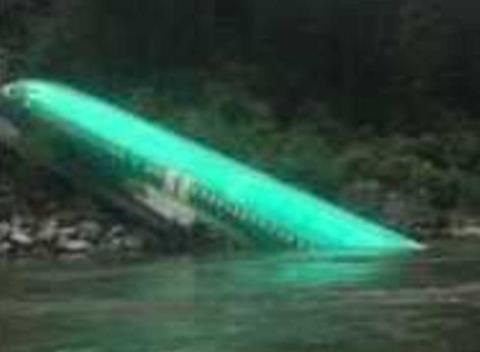
Once the first 737 emerges, and determines there are no predators in the area, then the flock starts to emerge, like lemmings going over the cliff.
[Insert Sidebar Here: Why biologists call groups of free range 737s flocks instead of schools. Something to do with the wings developing on dry land.]

737s struggling to climb the bank onto dry land.

More of the same.

A rare view of a 737 returning to take a drink from the river. Note the larval husk still protecting the 737.

Once on dry land the 737s are rounded up by Montana cowboys supervised by Montana State Fish and Game officials and herded to safe enclosures in the big city.

Note how the 737 wings develop after the airliners are on dry land. Wings are useless underwater. Once fully formed, fledged and mature the free range 737s are domesticated to a life of a commercial airliner. Washington State trade officials boast that free range 737s are superior to the farmed 737s produced in Kansas and South Carolina.

Thank you for joining us on this amazing episode of Wild Wild West. Join us next time for rare footage of a Rocky Mountain Oyster Hunt. Same Time Same Channel. Stay tuned!

Sunday, May 5, 2013

What Do You Do With a One-Footed Pigeon?

A Moral Conundrum. Or is that redundant?

Definition of CONUNDRUM

1
: a riddle whose answer is or involves a pun
2
a : a question or problem having only a conjectural answer
b : an intricate and difficult problem

Just what do you do with a one-footed pigeon? What can you do? What need you do? Anything? Or simply leave things be? Chalk it up to nature?

This one-footed pigeon has become a regular in our North Seattle back yard, joining the flock of pigeons that usually hangs out around our yard. As you can see from the photo below, the pigeon's right foot is rolled up in a ball and not functional. The pigeon hops around on its good foot, occasionally using its wings for balance.

This pigeon's right foot is severely deformed and rolled into a ball


In all other respects the pigeon seems perfectly healthy and happy, as pigeons go. It will sit on its one good foot and preen itself, like a parrot does. The bird seems to have no problem following and participating with its flock. Other than its foot, it seems to be a perfectly normal wild critter.

We've been told we should try to catch the bird to have the foot examined. But we're not sure how useful capturing the bird would be. If the deformed foot is say, a birth defect, there may not be any fix for the problem. Our inclination is to leave the bird alone. There might be more harm trying to catch the bird than potential benefit to the bird.

We'd love to hear your thoughts and suggestions.

Saturday, April 13, 2013

Organized Gangs of Parrots Ravage Burma

We just love this story! This article, in its entirety, appears in The Irrawaddy, covering Burma and Southeast Asia:

Organized gangs of local parrots in Pegu Division are leading sunflower farmers to despair. In Toungoo Township, farmers are arming themselves with catapults against the birds, which are attacking their crops and eating all the seeds. “These parrots have come in flocks since the previous month and we are always guarding our plantations with catapults,” one of the farmers told state media. It appears the pilfering parrots may have a coordinated plan of attack, sending out scouting parties. “Only one or two parrots come in the morning and afternoon. But they come in flocks in the evening,” he said.


Wow! Raymond Chandler could not have penned a more crisp and succinct paragraph in the whole history of noir crime fiction. This story cries out to be illustrated with blood soaked photographs of ravenous parrot gangs. Of desperate farmers fighting back with slings and arrows and catapults. But sadly, it is not to be. So we will do our best to illustrate this story with words as we attempt to parse the true meaning of this fierce struggle between parrot gangs and desperate farmers.


What in the hell is an Irrawaddy, anyway? We Googled the term to find out that it's apparently Burma's largest river and most important commercial waterway. Okay. That works for us. Guess that's a good name for a website covering Burma and Southeast Asia.


And what's up with this Burma - Myanmar confusion? You call it Myanmar. We call it Burma. It was always Burma when we were growing up.  Just like when you say Beijing we think Peking. But we digress.


Getting back to the blood soaked battles between parrots and pirates. Sorry, parrots and farmers. What do you suppose the farmers arm their catapults with to beat off the parrot hoards? Sticks and stones? Sunflower seeds? Whatever it is, it doesn't appear to be all that effective by the tone of the article.


Oh for some photos! When we first read this article we immediately thought organized gangs of Cockatoo parrots. Goffin's Cockatoos to be precise. Gawddamn juvenile delinquents! We have one, so we know what we're talking about. But probably the wrong continent. More likely the parrots involved are Indian Ringnecks, indigenous to the Indian subcontinent and Southeast Asia. Specifically the Psittacula krameri borealis, or Rose-ringed parakeet native to Burma.


By all accounts, Indian Ringneck parrots are ravaging London and the rest of Britain, so is it no wonder they are overrunning a little podunk country like Burma:


Twenty years ago we never would have encountered a story this wonderful, or bizarre, in our local newspaper. Got to love the Internets!

Sunday, March 11, 2012

The Birds Do It. And the Bees Do It. The Sex Lives of Hummingbirds


The birds do it. And the bees do it. Parrots do it. Apparently even hummingbirds do it! Masturbate that is. We caught this male Anna's Hummingbird masturbating on our hummingbird feeder rail. He puffed himself up like a blowfish to nearly twice his normal size. And he kept doing it. For something like ten minutes. It finally dawned on us we should get the video camera out. And we still managed to record the last minute of it.


Wikipedia notes that many animal species masturbate. According to Wikipedia:


Many birds masturbate by mounting and copulating with tufts of grass, leaves or mounds of earth. . .


We can add hummingbird feeder rails to that list!